On Tuesday, May 12th, my younger brother David died in a hospital near his home in California. He died of sudden septic shock caused by a large G.I. tumor that had just been discovered a few days earlier. He was only 64 years old — five years my junior.
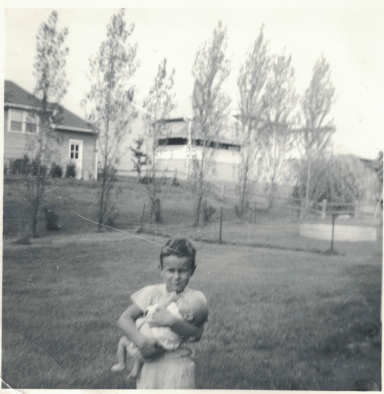
David was born on July 9th, 1961, while my parents and I were living in Lawrence Township, NJ, having recently moved from an apartment in Princeton. For the first five years of my life I’d been an only child, and I was thrilled to have a brother.
Dave was a happy, cheerful boy, and it was obvious from early on that he was highly intelligent. He struggled, however, with severe dyslexia, which made schoolwork difficult, and so he spent some of his later primary-school years at a school in upstate New York — the Mohonk Cragsmoor School — now defunct — where he was able to get the focused attention he needed. (He also attended — I’m not sure when, or for how long, or at what level of participation — the Columbus Boychoir’s school in Princeton.)
Throughout his childhood David had studied judo (our father William Pollack, who had learned judo as a boy in London, and studied at the Kodokan in Tokyo after the war, used to teach a class at the YMCA in Princeton), and sometime in the late 1970s David became a close student of my Hung Gar sifu, Grandmaster William Chung. He quickly became highly adept.
For a while in the 1980s, after I had earned my black belt from Master Chung, I taught a Hung Gar class of my own in Manhattan. One of my students was a likable young woman named Laura, who began attending Master Chung’s classes as well, where she met David. They hit it off so well that they ended up moving to California together, and getting married. They soon had two boys, Jon and Andrew, and much later a third, named Ian. (Their marriage, however, failed after sixteen years or so, just around the time Ian was born, and Ian was raised by Laura and her second husband.)
David — whose versatile and restlessly curious mind made it possible to learn things easily — was working during most of the 1990s in real-estate development, but somewhere around the turn of the millennium he noticed something that struck him as an important opportunity: an academic paper about making a new type of steel (Martensitic Microcomposite Formable Steel) that would be both corrosion-resistant and exceptionally tough. David saw that if the manufacturing obstacles could be overcome, this remarkable product could have a revolutionary effect on both highway infrastructure and architectural engineering. (Corrosion of rebar is a major problem in concrete bridges and overpasses, and the design of tall buildings has always been tightly constrained by the limits of structural steel.)
So David, with his usual inexhaustible energy, set about rounding up a team of experts and investors (including the professor of metallurgy at Berkeley who had done the original research), and started a new company, MMFX Steel. David’s name is on the original patent, filed in 2001.
There were enormous headwinds — most of all that he was taking on the giant corporations of the steel industry with a proprietary product that directly threatened their modus vivendi — but by the mid-Aughts his company had acquired a disused steel mill in Welland, Ontario, and had begun getting contracts from highway departments and large construction companies around the world.
Then came the global financial crisis of 2008. With budgets collapsing, projects were put on hold everywhere, orders were cancelled, and the crisis for MMFX — which, still being in an early expansion phase of its growth, ran on very tight margins — became existential. The corporation was forced into a reorganization, and as so often happens to founders in such crises, David was forced to step aside to save the company. (It is still in business, under another name, and this superior material is now in bridges, skyscrapers, and parking decks all over the country.)
Meanwhile, my father and mother, having moved to San Diego County in 1985, had been trying to organize a pharmaceutical company to manufacture immune globulins to treat a variety of diseases, allergies, and immune disorders, based on the work my father had done in the development of RhoGAM (a treatment that prevents Rh hemolytic disease of the newborn). My parents were stuggling to get the company off the ground, and David joined in to help.
Working with my father, David spent years learning the immunological theory behind the control of immune response that had made RhoGAM possible. When my mother died in 2006, my father was already 80 and in failing health, so David took over the company.
Launching a pharmaceutical business is a tremendously difficult and costly affair. The problem is not only the long time-frames involved in getting through human trials and FDA approval, but also the need for enormously expensive “clean rooms” for manufacturing and vialing product. David, with his usual ingenuity, found a way to build mobile, modular clean-rooms inside shipping containers, at a fraction of the cost.
Among the first products the new company developed was immune globulin for treating antibiotic-resistant infections of the kind that are becoming so troublesome in hospitals in recent years. The product was highly effective in animal testing, and although David had not yet managed to bring it to market at the time of his death, a poignant anecdote confirms its effectiveness:
After my mother died in 2006, my father moved in with David and his sons. By 2013, at age 87, his health had declined precipitously; he was in hospice care at home, and we all knew the end was near. Among his other afflictions, he suffered from a persistent and untreatable urinary-tract infection. In his final weeks, this had progressed into systemic sepsis that caused him great suffering. (Septicemia, by all accounts, is a ghastly thing to experience.) Watching him suffer was just too much for David to bear, and he decided to go to the lab and get a vial of his IG serum. We injected it into our dad’s IV line, and the effect was astonishing: within minutes his color changed, his body relaxed, and his breathing slowed. He was barely able to speak at this point, but he managed to say “Oh — I feel so much better… thank you so much.” I can’t remember for sure, but I think those might have been his last words; a day or two later he died.
That visit to California in November of 2013 was the last time I ever saw my brother face-to-face. We spoke and exchanged messages often, but he worked so hard, seven days a week, on getting this project over the finish line, that he never found time to come back East for a visit — and I never went back to Southern California again (I don’t much like to travel anyway, and after so many years working out there, I’d had enough of the place to last a lifetime.)
Soon after our father’s death, David met, and fell in love with, a lovely woman, Susan, who became his partner and soul-mate for the rest of his life.
On Friday, May 8th — just over two weeks ago, as I write — David texted me to say that he had just got home from the ER, where he had gone after having severe intestinal pain. A CT scan had revealed a blockage caused by a large tumor, and the hospital sent him home. He called on the phone (the last time we ever spoke), and said that, it being the weekend, his plan was to talk to an oncologist on Monday to start figuring out what to do next.
David spent Friday and Saturday nights in terrible pain, and by Sunday morning he was clearly very sick indeed. Susan’s son, a physician at Scripps, had joined them by then, and insisted that Dave go to the hospital — a different hospital! — at once. He was taken there by ambulance.
By the time David got to the ICU, he was in steep decline; it turned out that was was in toxic shock from E. coli septicemia. which quickly led to general collapse. The ICU staff did their best, but by Tuesday he was gone.
The bitter pill here — aside from the catastrophic decision by the first ER to send David home — was that once it was known that David was in septic shock, Susan went to his lab to get some of the same IG serum that had worked so dramatically on our father’s septicemia 13 years earlier. But the hospital, of course, wouldn’t administer it, because it hasn’t yet received FDA approval. (You can’t just let people roll up to your ICU with things they’d like to inject the patient with, of course, but I imagine he’d still be alive today if he’d been given it.)
I am stunned — staggered — by David’s untimely death. C.S. Lewis, in his book A Grief Observed, said that the death of a loved one is an amputation; the metaphor is more apt than I had realized. A piece of you — a big, important piece — is suddenly just missing; you keep checking, but it is stubbornly just… gone.
I have never known anyone like my kid brother David. He was brilliant, loving, funny, daring, and unquenchably energetic. He could learn, to the level of complete mastery, anything he set his mind to. He was an excellent martial artist. He could drive an 18-wheeler, and repair its engine. He could fish, and shoot, and fly a plane, and play the guitar. He knew, without any formal education, everything there was to know about both immunology and ferrous metallurgy. He could build clean-rooms in shipping containers, and even found time to work on designing high-efficiency internal-combustion engines that run on a slurry of carbon microparticles. He was also the toughest, stubbornest, most utterly indomitable spirit I’ve ever met. It just seems impossibly, incomprehensibly wrong that he could suddenly be gone — and worst of all, that a man like that should be cut down while doing truly useful, world-changing things, while here I still sit: a retired geezer, five years his senior, who just reads and thinks and scribbles and opines (and mixes the occasional record).
I love you more than words can ever say, David, and I will miss you terribly till the end of my days. How I wish I’d been able to say goodbye.
Rest in God’s arms, my dear brother.
7 Comments
I wish there were some comforting words to offer for what sounds like an FUBAR situation, Malcolm, but they would inevitably be shallow. Just again, I’m very sorry for your (and your family’s loss). Please let me know if there’s anything – besides hugging those I love as you recently suggested – I can do to help.
Just as an aside if I may, it’s interesting that your brother David’s dyslexia coexisted with a powerful precocity, incarnated in his hobbies and abilities in the steel and medical fields. I wonder if there’s a certain Ashkenazi influence there, where diseases or maladies (like Gaucher’s, say, or in this case a reading difficulty) can be offset by high IQ and other positive traits. Simply speculating, of course.
Again, I am so sorry for your loss. In these moments, words fail, but that little photo from long ago truly captures the genuine, time-transcending love of which you speak.
It brings to mind these lines from Eliot’s “East Coker,” from which I have long taken comfort:
There is a time for the evening under starlight,
A time for the evening under lamplight,
(The evening with the photograph album).
Love is most nearly itself
When here and now cease to matter.
No words. Impressive fellow I note however.
Thank you everybody. Heading to CA tomorrow to wade through all the necessary things.
And Jason, who can say? We do have an Ashkenazi admixture, about 25%. But who knows where these things come from? (Or where they go?)
Sending love to you, Malcolm, and to the lovely Nina also, praying you seek and find comfort in one another as you wend your way through the shocking loss of beloved brother David.
My heart goes out to you, with my deepest condolences, Malcolm, to you and to all your family.
I met David through a friend a while back. I was suffering with several issues and he thought he could help. He sent me some of his product and when it helped sent me case of it. We talked fairly often and every time I got low he sent me another case. I’m doing great now but without his help I probably wouldn’t be writing this. I just found out about his death today and am shocked and devastated. He will be missed.