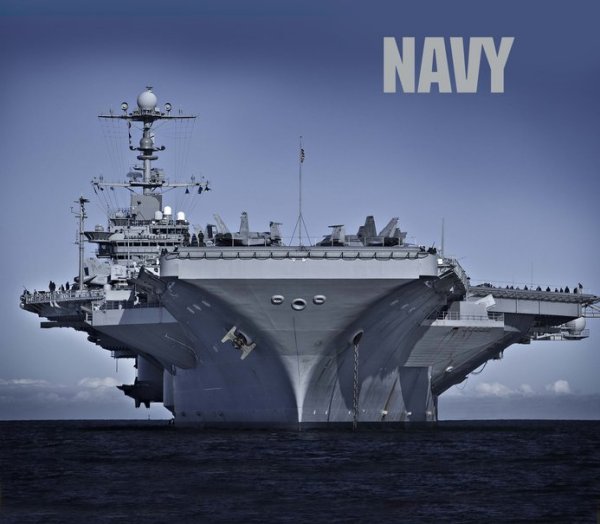
We are now active participants in Syria’s civil war. (The poll results must have been irresistible.)
I’m sure everything will go as planned.
We are now active participants in Syria’s civil war. (The poll results must have been irresistible.)
I’m sure everything will go as planned.
In private correspondence today, I’ve been discussing with an old friend the subject of what practitioners of Chinese martial arts call ‘chi’. It’s a puzzling topic — and so, having no time to write a substantial post tonight, I’m posting a link to something I wrote on this subject about five-and-a-half years ago.
You can read it here.
Here’s a report of a remarkable comment from Associate Justice of the Supreme Court Ruth Bader Ginsburg:
People seeking clues about how soon the Supreme Court might weigh in on states’ gay marriage bans should pay close attention to the 6th Circuit Court of Appeals, Justice Ruth Bader Ginsburg told a Minnesota audience Tuesday.
Ginsburg said cases pending before the circuit covering Kentucky, Michigan, Ohio and Tennessee would probably play a role in the high court’s timing. She said “there will be some urgency’ if that appeals court allows same-sex marriage bans to stand. Such a decision would run contrary to a legal trend favoring gay marriage and force the Supreme Court to step in sooner, she predicted.
She said if the appeals panel falls in line with other rulings there is “no need for us to rush.’
In other words, as long as activist courts continue overruling the will of the people in a way that Ms. Ginsburg finds politically congenial, then it’s best if her Court drags its feet as long as possible. Otherwise, she’s got work to do! and no time to waste.
So much for impartial justice, and for the consent of the governed. I’m not surprised to hear that Justice Ginsburg feels this way — we already know how this woman feels about the United States Constitution — but it harrows me that she can be so blasé about fessing up in public. Obviously she knows that she wields great power, and is accountable to absolutely no one.
Pity the laboring American citizen. His vote means almost nothing. He is subject to the tyrannous caprices of a flamboyantly autonomous Executive; to the occult machinations of a vast administrative bureaucracy, sometimes called the ‘Fourth Branch’, for which there is no accountability at all, and upon which he can exert no check whatsoever; and to the ideological whims of a plenipotent judiciary that routinely annuls what little victories of self-determination he occasionally manages to achieve through his state legislatures. Shackled to his oar, he toils and groans to pull the ship forward nevertheless, though the combined tonnage of freight, idle passengers, and stowaways recently brought aboard have sunk it so low in the water that its gunwales are already awash. Should he grumble, or cry out in his exhaustion, he swiftly feels the lash.
Ahead, dark clouds gather.
Tomorrow’s the big vote in Scotland. I’m all for independence. Nick Land has argued, and I think rightly, that because Scotland pulls farther to the Left than the UK as a whole, its separation would immediately snap the rump UK rightward, while at the same time separation from London’s flowing teat would accelerate the failure of the unsustainable Leftist project in Scotland. This in turn should provoke, after some necessary unpleasantness, a rightward reaction in Scotland as well, and a return to traditional Scottish values — industry, thrift, self-reliance, care for the future, and reluctance to burden others with your troubles — core cultural traits that have melted away after too many years in the warm, stupefacient soak-bath of the British welfare state.
So from a reactionary point of view, it’s a nae-brainer. I think I might even head for Cawdor Castle, my family’s ancestral seat, and see if I can lay claim to the Thanedom.
Update, 9/18, 4 PM EDT: According to this Twitter trend-map, the Ayes are out in force.
Update, 9/18, 11:30 PM EDT: It looks like the Naes are going to carry the day. Oh well.
Here’s a piece from Jay Nordlinger on how hard it is to keep up with what we’re allowed to call things from one day to the next. (I’m old enough now that I’m simply refusing to play along anymore.)
To find out what this has in common with the geology of the Hawaiian Islands, you’ll have to read this post of my own, from 2006.
Speaking of the New York Times: still no mention in our “newspaper of record” about the murder of young, white Brendan Tevlin by a black jihadist.
Just a local crime story, I guess. Not fit to print.
There’s a fine, gloomy piece by Roger Cohen in the Times today: The Great Unraveling.
The fabric of society frayed. Democracy looked quaint or outmoded beside new authoritarianisms.
…Nobody connected the dots or read Kipling on life’s few certainties: “The Dog returns to his Vomit and the Sow returns to her Mire / And the burnt Fool’s bandaged finger goes wabbling back to the Fire.’
Until it was too late and people could see the Great Unraveling for what it was and what it had wrought.
Now this is something: Rudyard Kipling, quoted with approval on the Op-Ed page of the New York Times. Do I detect the tendrils of neoreaction?
Welcome, Mr. Cohen. Do come in.
This from Jerry Coyne: If ISIS Is Not Islamic, then the Inquisition Was Not Catholic.
This just in: Antarctic sea ice is at its greatest extent ever recorded.
can someone give this man an advil? pic.twitter.com/fvwOsoOzV0
— The Friendly Asshole (@FriendlyAssh0le) April 9, 2014
In trying to catch up on all the stories we missed during our August break, I’d be remiss not to comment on the malevolent Muslim entity calling itself the Islamic State, and what we should do about it. My view is not, in many respects, a mainstream one.
That said, I’ll hasten to align myself with some mainstream opinions: first, that the emergence of ISIS is a horrifying eruption of genuine evil, and second, that it has done everything a regime could possibly do, short of an attack on our own soil, to provoke a vicious military response by the United States. It has overrun territories that we spent long years, billions of dollars, and thousands of lives to secure, capturing huge stockpiles of U.S. weapons and matériel in the process. Even more provocatively, it has publicly and gruesomely executed American civilians. It has massacred and enslaved men, women, and children throughout the region, and wherever it goes it imposes unspeakably barbarous cruelties. If ever there was a foe that all of us can agree deserves utter annihilation, this is it.
In response to this, then, what are we to do? Pundits and politicoes on both sides of the aisle have been bawling for action since midsummer, while President Obama has appeared, until now at least, more concerned with recreation than reprisal, or even reaction. He has now announced his intentions. I am not reassured.
Least reassuring of all in the President’s speech was his assertion, right up front, of a staggeringly disingenuous falsehood: that “ISIS is not Islamic”. If that is the foundation upon which our strategy, both in the Middle East and here at home in the West, is to be based, then we are doomed.
What is that “strategy”? Mr. Obama enumerated four points:
First, airstrikes. Fine with me, but airstrikes by themselves can only do so much. They are effective against supply lines, and against military targets on open ground, but they are problematic wherever the enemy can melt into the civilian background. Unless one has in mind indiscriminate slaughter of both ISIS and their civilian prey — and the West no longer has the stomach for this sort of thing — airstrikes will not be an option in densely populated areas.
Second, Mr. Obama proposed providing support on the ground — arms and training — to enemies of ISIS. This is, for obvious reasons, by far the weakest plank in the platform. It is sheer desperation.
Mr. Obama mentioned the newly formed Iraqi government as one of the champions we will be backing. But we have been training and arming the Iraqi military for a decade or more now; they have been routed again and again by ISIS, with high rates of desertion and defection. Why would we imagine that this time around, with hardened resolve, we will somehow be able to turn them into the 82nd Airborne? Moreover, every time they lose in the field, their arms and equipment fall into the hands of the enemy; by repeatedly rearming them we are as often as not arming ISIS.
Also on the list are the “Syrian opposition”. But ISIS is the Syrian opposition. Subtract them, and you are left with a ragtag assortment of Muslim warlords (in most cases mere runners-up to ISIS in the regional battle royal), and a few genuine Western-style reformers. But the latter are a feeble congeries of what the President himself has described as “ farmers or dentists or maybe some radio reporters who didn’t have a lot of experience fighting.’ Can we expect them to prevail against a heavily armed and financed fighting force that managed to crush even the doughty Pesh Merga? The odds are that any group we arm in Syria will lose, and that any arms we provide will end up being used against us. Have we learned nothing? The entire region is a snakepit, a nest of vipers. That we can select this or that serpent from the writhing mass, pack its fangs full of venom, and send it forth as our champion while certifying its fealty is a palpable absurdity.
Mr. Obama spoke of coalition. But support is scanty, and alliances among the regional interests are mercurial and evanescent. (Victor Davis Hanson has summed this up nicely in a recent essay.) The Turks, who are one of the few players in the area who have the military power to make a difference, have already announced that they will not provide any support whatsoever, and will not even allow U.S. forces to operate from Turkish soil. (That ISIS holds forty-nine Turkish diplomats and their families hostage is, no doubt, a factor here, as is Prime Minister Erdogan’s Islamism, support for Hamas, etc.) As far as I am aware, not a single nation has pledged actual military participation in operations against ISIS. Germany and Britain have already made clear that they refuse.
Clearly, if anyone is going to do the work of defeating ISIS militarily under this “strategy”, it will be the United States, mostly alone. Those stakeholders in the region who might have done so in our absence — the Turks and the Saudis, for example — will be delighted to stay out and let us do it for them. The idea that these nations will be more inclined to participate if we lead the way is another palpable falsehood; the more we do, the less they will need to do — and the less they do, the more we will find ourselves doing.
Third, Mr. Obama proposed to redouble our counterterrorist efforts. Expect more of all that you have come to know and love from the NSA and the TSA. He will also “chair a meeting of the U.N. Security Council to further mobilize the international community around this effort.”
Ah, the U.N. I’m sure we can all heave a sigh of relief.
Lastly, the President had this to say (my emphasis):
Fourth, we will continue to provide humanitarian assistance to innocent civilians who’ve been displaced by this terrorist organization. This includes Sunni and Shia Muslims who are at grave risk, as well as tens of thousands of Christians and other religious minorities. We cannot allow these communities to be driven from their ancient homelands.
In comedy, timing is everything.
Well, what to do, then? Despite the difficulties, there seems to be a prevailing sentiment that we ought to smash ISIS. (I’ll confess that I feel its pull myself.) But almost entirely absent is any rational contemplation of the outcome. Indeed, I did something the other day that I’ve never done before: I called a nationally syndicated conservative talk-radio host, during a program in which he had been howling for war, to ask him what would happen after we won. Given that the entire region is an ungovernable hell-hole, I asked, and given also that any power vacuum seems inevitably to be filled by brutal jihadist warlords, wouldn’t we simply be forced either to rule the place ourselves — forever — or to withdraw (as we just did), and soon find ourselves facing the same mess all over again (as we just have)? His response was that, should we leave, then yes, “there’s a power vacuum, but there are also countries in the area that can fill it — and we ought not.”
This theory has, however, already been put to the test. Our exit from Iraq left a power vacuum — and it was ISIS, not the other “countries in the area”, that rose up to fill it. Why should this be any different next time? I think the host realized that this was a something of a soft spot in his plan; ultimately he said “what’s the alternative? To sit around picking our noses?” and said that we ought to “let the chips fall where they may”.
There is no doubt that we can crush ISIS if we want to; in purely practical terms, it is probably within our capacity to extinguish all biological activity throughout the region (and I daresay that if we did, the world would almost certainly be a safer and happier place for centuries to come.) But can there be any reasonable doubt that if we attempt it on the terms the President has outlined, and in accordance with our new and ruthful style of war-making, that we will be hard-pressed to win, and never be able to leave? This is what the President so tellingly omitted from his “strategy” speech: any definition of victory, or any vision of how we might exit. If we go up against ISIS on these terms, their caliphate will be our tar-baby, forever.
So: what else might we do? As painful as it might be not to use our overwhelming power to punish these vermin, our real national interest might be better served by:
‣ Airstrikes wherever they might be useful, along with relentless pinpoint attacks against ISIS leadership whenever possible. In the event of attacks against Western nations, retaliation should be swift, certain, disproportionate, and harsh.
‣ Support for the (very) few reliable forces in the region, most notably the Pesh Merga.
‣ Humanitarian support, in whatever form we can provide, to those afflicted, besieged, and displaced.
‣ The most vigorous containment we can muster. Above all — and this is the nettle that nobody in the West seems ready to grasp — we must quarantine Islam in its homelands, while securing our own borders. If there is a coalition to build, it is a coalition among Western nations to agree that Islamism is a metastatic disease, that the pathogen is Islam itself, and that any mass population of Muslims contains an irreducible percentage of carriers. As I urged in my previous post, the West must come to understand “that mass importation of Islam to the West has been a blunder of incalculable magnitude, and that it should be arrested at at once, and reversed as humanely and expeditiously as possible.”
There are two advantages to this approach. The most obvious is that we spare our own lives and treasure, rather than bleeding them away ad inifinitum into the unquenchable sands of the Mideast. The second is that it is only by refusing to police the region ourselves that the other principalities of the area may at last be forced to step into the breach.
Above all else, we must be clear about the real nature of the conflict between Islam and the modern West. Our reader JK just sent along a link to a refreshingly frank assessment, which you can read here.
Among the topics I passed by during our August hiatus was the story about Rotherham, England, in which it was revealed that groups of Muslim men had been using young white girls as sex slaves. This had been going on for many years, over which time there had been at least 1,400 victims, some of them only eleven years old.
The crimes did not go unreported; they were reported early and often. Nothing was done, however, because the officials who might have taken action were afraid of being accused of racism.
There’s been a great deal of commentary about this already, and I’m coming in late. John O’Sullivan posted a good piece, for instance, over at NRO:
The motives of the exploiters, though vile, are not hard to understand. They plainly include both racism and sexism alongside the lust and cruelty enabled by their misogynistic culture. But what explains the silence, the acquiescence, even the cooperation of the authorities? Their motives seem to derive from the rich stew of progressive absurdities that constitute official attitudes in modern Britain. The first is the fear of being suspected of racism. Again and again the police and the social workers shrank from intervening or responding to complaints because to do so would invite the accusation that they were “racist”… To uncover such scandal would be not only racist, it would commit a sin against the ideal of multiculturalism that now actuates much official policy.
…Another element in official attitudes is hostility to the family and a hatred of the notion that families might instill traditional moral values in their children. Such hostility proved very convenient for the criminal gangs, who probably had to overcome a weaker moral resistance on the part of their grooming victims. To be sure, this hostility arises from a very different source than sexism or contempt for the white working class: a sense among progressives in the public sector that intact families undermine equality and that even etiolated Christian beliefs obstruct multiculturalism. If that sounds a trifle paranoid, recall that it was the same Rotherham social-work department that wanted to remove children from foster parents whose support for UKIP indicated an impermissible hostility to multiculturalism. You couldn’t make it up.
There are a lot of essays out there saying more or less the same thing: political correctness has gone too far, we’ve been blinded to reality by the dormitive spell of multiculturalism, by surrendering too much of our liberty and tradition to the utopian fantasies of “progressive” ideologues, and so forth. All of this is true. I have yet, however, to hear anyone (other than the usual lepers and pariahs) say what really needs saying: that mass importation of Islam to the West has been a blunder of incalculable magnitude, and that it should be arrested at at once, and reversed as humanely and expeditiously as possible.
Instead, what we have in Rotherham is perhaps the clearest experimental confirmation yet of Auster’s First Law of Majority-Minority Relations in Liberal Society, which can be expressed as follows:
Once the equality of all human groups is accepted as a given, any facts that make a minority or foreign group seem worse than the majority native group must be either covered up or blamed on the majority.
The First Law has a corollary:
The more egregiously any non-Western or non-white group behaves, the more evil whites are made to appear for noticing and drawing rational conclusions about that group’s bad behavior.
I miss Lawrence Auster. He saw so many things so clearly, and he saw them long before most of the rest of us did. Go and browse his archives.
What’s up with Takimag? The site’s been down all day. It’s worrisome.
Today we present a fine piece by Steven Pinker on the state of our elite universities. Pinker’s essay is a response to a New Republic article, by William Deresiewicz, entitled Don’t Send Your Kid to the Ivy League.
Pinker, writing with his usual clarity and brio, defends the Ivies, and makes the case for standardized testing as the best foundation for meritocratic admissions — full speed ahead, and damn the torpedoes. An excerpt:
Let’s daydream for a moment. If only we had some way to divine the suitability of a student for an elite education, without ethnic bias, undeserved advantages to the wealthy, or pointless gaming of the system. If only we had some way to match jobs with candidates that was not distorted by the halo of prestige. A sample of behavior that could be gathered quickly and cheaply, assessed objectively, and double-checked for its ability to predict the qualities we value”¦.
We do have this magic measuring stick, of course: it’s called standardized testing. I suspect that a major reason we slid into this madness and can’t seem to figure out how to get out of it is that the American intelligentsia has lost the ability to think straight about objective tests. After all, if the Ivies admitted the highest scoring kids at one end, and companies hired the highest scoring graduates across all universities at the other (with tests that tap knowledge and skill as well as aptitude), many of the perversities of the current system would vanish overnight. Other industrialized countries, lacking our squeamishness about testing, pick their elite students this way, as do our firms in high technology. And as Adrian Wooldridge pointed out in these pages two decades ago, test-based selection used to be the enlightened policy among liberals and progressives, since it can level a hereditary caste system by favoring the Jenny Cavilleris (poor and smart) over the Oliver Barretts (rich and stupid).
If, for various reasons, a university didn’t want a freshman class composed solely of scary-smart kids, there are simple ways to shake up the mixture. Unz suggests that Ivies fill a certain fraction of the incoming class with the highest-scoring applicants, and select the remainder from among the qualified applicant pool by lottery. One can imagine various numerical tweaks, including ones that pull up the number of minorities or legacies to the extent that those goals can be publicly justified. Grades or class rank could also be folded into the calculation. Details aside, it’s hard to see how a simple, transparent, and objective formula would be worse than the eye-of-newt-wing-of-bat mysticism that jerks teenagers and their moms around and conceals unknown mischief.
So why aren’t creative alternatives like this even on the table? A major reason is that popular writers like Stephen Jay Gould and Malcolm Gladwell, pushing a leftist or heart-above-head egalitarianism, have poisoned their readers against aptitude testing. They have insisted that the tests don’t predict anything, or that they do but only up to a limited point on the scale, or that they do but only because affluent parents can goose their children’s scores by buying them test-prep courses.
But all of these hypotheses have been empirically refuted. We have already seen that test scores, as far up the upper tail as you can go, predict a vast range of intellectual, practical, and artistic accomplishments. They’re not perfect, but intuitive judgments based on interviews and other subjective impressions have been shown to be far worse. Test preparation courses, notwithstanding their hard-sell ads, increase scores by a trifling seventh of a standard deviation (with most of the gains in the math component). As for Deresiewicz’s pronouncement that “SAT is supposed to measure aptitude, but what it actually measures is parental income, which it tracks quite closely,’ this is bad social science. SAT correlates with parental income (more relevantly, socioeconomic status or SES), but that doesn’t mean it measures it; the correlation could simply mean that smarter parents have smarter kids who get higher SAT scores, and that smarter parents have more intellectually demanding and thus higher-paying jobs. Fortunately, SAT doesn’t track SES all that closely (only about 0.25 on a scale from -1 to 1), and this opens the statistical door to see what it really does measure. The answer is: aptitude. Paul Sackett and his collaborators have shown that SAT scores predict future university grades, holding all else constant, whereas parental SES does not. Matt McGue has shown, moreover, that adolescents’ test scores track the SES only of their biological parents, not (for adopted kids) of their adoptive parents, suggesting that the tracking reflects shared genes, not economic privilege.
What a breath of fresh air. Read the whole thing here.
Meanwhile, from another corner of the Steveosphere, Steve Sailer calls our attention to a new paper on the genetic underpinnings of cognitive variation. Among the authors you’ll find a familiar name: Steven Pinker.
Finally, Ron Unz has rounded up some responses to Pinker’s response to Deresiewicz, here. (Among these is a singularly feeble comeback from David Brooks, here.)
Over at Outside In, Nick Land offers a neoreactionary’s perspective on the coming ‘exit’ referendum in Scotland.
My Scottish mum would have approved.
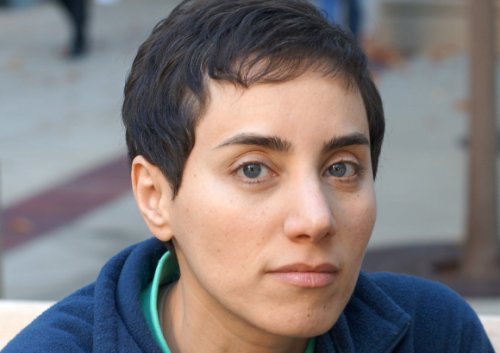
For the first time, a woman has been awarded the coveted Fields Medal, which is generally regarded as the the mathematician’s equivalent of the Nobel Prize. Her name is Maryam Mirzakhani, and you can read about her here.
This is of course a proud day for female mathematicians. Congratulations to Dr. Mirzakhani.
Once again, Vladimir Putin has snaffled the U.S. and her quondam allies: the acceptance by Ukraine of a proffered cease-fire on what, for Russia, are very comfortable terms, will douse any ardor in the West for aggressive confrontation.
In last night’s NightWatch bulletin, John McCreary wrote:
While NATO plans to fight Russia, Putin’s peace plan has outpaced NATO’s profession of resolve. The crisis will be winding down on Friday. Even if it does not, Putin emerges with enhanced international stature. If the fighting in Ukraine stops, support for the NATO rapid reaction force in Eastern Europe will weaken rapidly.
At every opportunity in recent years, Vladimir Putin has mocked and and taunted the epicene, etiolated, and increasingly self-enstupidated West, in whose faculty-lounge worldview something like ISIS “has no place in the 21st century”, and for whom the idea of a virile former superpower reclaiming some of its lost assets is now “unthinkable” (a word that has a depressingly literal aptness here, I’m afraid). Putin knows, when he embarks on these adventures, that there is a threshold of audacity below which nobody is going to stop him, and he is adroitly probing its limits. We can be sure that with every advance he is further emboldened. Sure, there may be sanctions, and they may hurt, but Putin enjoys overwhelming popular support — and I think the West has forgotten the glaring historical fact that the Russians will always bear brutal hardships, if they must, to prevail against outsiders who seek to control them. If we were sensible, we would recognize that Russia has, and has always had, a natural penumbra of influence and control, and that is beyond our power — at least the power we are realistically willing to exert, or that it is in our interest to exert — to deny Mr. Putin the run of it. Crimea is not the Gaspé Peninsula.
The worst possible approach is the one we consistently choose: spluttering outrage and “red lines”, backed up by nothing. A great power may be forward-leaning and aggressive in international affairs; it may also be content simply to attend to the security of its own proper sphere of influence. Both approaches have their costs and benefits. What is important above all is to choose, and to be consistent. At this, we consistently fail — as we seem to do, these days, at so many things.
Here’s a real find: what purports to be the only extant recording of the Sage of Baltimore. It’s a long interview, with good audio quality.
We note with sadness the deaths of Joan Rivers and Glenn Cornick.
Gather those rosebuds, folks…
Let’s review the results of our adventure in Libya, for which President Obama and the presumptive Democratic heir, Hillary Clinton, can fairly be assigned complete responsibility.
‣ After a successful, decades-long effort to bring Muammar Qaddafi to heel, and after feting our new North African ally at the highest levels of government, we betrayed our side of the deal, and gave our military support to a ragtag assortment of revolutionaries — most of whom were violent Islamists, and our sworn enemies. Qaddafi’s regime was toppled, and his corpse was dragged through the streets.
‣ Cyrenaica fell, and then Tripolitania, as the country — formerly one of Africa’s most prosperous — slipped into blood-spattered chaos. The black flag of al-Qaeda flew from government buildings, and Westerners fled. Libya is now a ‘failed state’, and has effectively ceased to exist as a nation.
‣ Our ambassador and three others were gruesomely murdered in a coordinated attack on a carelessly defended U.S. diplomatic compound, while we did nothing. Our only response was a mendacious political whitewash for domestic consumption.
‣ Qaddafi’s arsenals and other assets fell into the hands of jihadis, and flowed from there throughout the Middle East.
‣ This week, we have learned that eleven jetliners have been taken from Tripoli’s airport, for purposes unknown. (This last item, despite its obviously worrisome implications, appears to have received no coverage whatsoever in our “newspaper of record”.)
What theme, what ideological fixation, could have started Mr. Obama and Ms. Clinton (and to be fair, George W. Bush as well) on such a course? The central delusion of ‘progressivism’ itself: a belief in a benevolent historical teleology, a self-actuating ‘arc of justice’ that professional uplifters and visionary magnificoes may, when the fancy takes them, assist with coercive, and often destructive, intervention. Add to this the other great folly of our time — the fantasy of essential human uniformity — and there is no stupidity, no great unwisdom, of which our nation is incapable.
It’s been a refreshing break, beginning with a splendid mountaintop wedding in New Hampshire back in late July. I don’t often post such things, but here is a shot of your humble correspondent at that happy occasion:

After that it was just a lot of this sort of thing:

Anyway, that’s done: August is over, and now it’s shoulder to the wheel once again. To get things rolling, here are some links that have piled up over the summer:
— Why should you wear the glasses?
— Derb’s tired of the red pill.
— Ummm…
— Fred Reed on gendered space…
— ..and a related item.
— Some pro-tips from my sifu’s sifu’s sifu’s sifu’s sifu, Wong Fei Hung.
— A sad story.
— A response to Rotherham from hbd*chick.
— The poorest state, if it were a state.
— Game of Thrones, as it might have been.
There’s a lot to catch up with. Back soon.
All right, then. August is over. Did I miss anything?
Just kidding. Back soon, with a spleenful.
It’s August once again, and things will be quieter than usual here for the next couple of weeks — maybe a post or two here and there, but nothing much, probably, till after Labor Day. As always, please feel free to browse our ever-expanding archives, and to try the “Random Post’ link at upper right.
In a recent column, Thomas Sowell asked: Is thinking now obsolete?
Perhaps it is. Read this label:
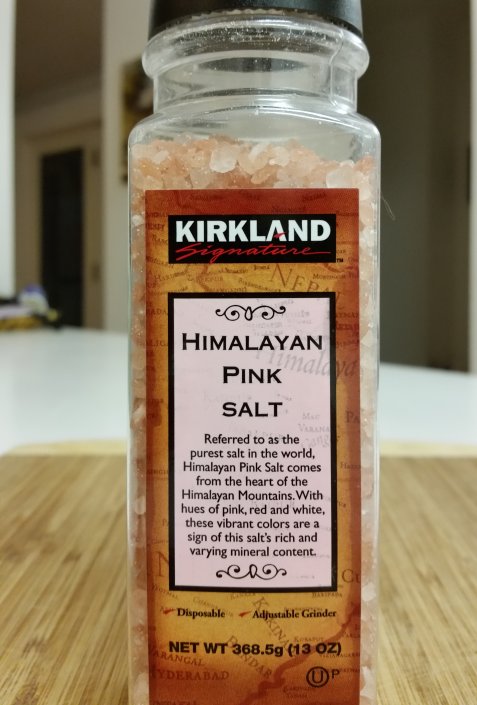
This is the sort of blithe and cheery obliviousness that carries me to the brink of despair.
There’s a lot of buzz lately about self-driving cars. They were the focus of a couple of sessions when I was at Singularity University a couple of years ago, and while I was there Google sent one over so we could get a look at it. The consensus at SU was that they confer so many public benefits that their adoption is almost inevitable. That they do indeed have many advantages is undeniable, but as the resident pessimist at the program I attended, I was far less swept away with enthusiasm than the others in the room, almost all of whom were either tech entrepreneurs or globalist Utopians (with a great deal of overlap).
One problem that you don’t hear about so much is this: driverless cars are autonomous robots, and as Isaac Asimov so presciently observed ‘way back in 1942, if we are going to be able to let autonomous robots exist among us, we need to lock them down with built-in ethical restraints. Asimov proposed what he called the Three Laws of Robotics. They are:
1. A robot may not injure a human being or, through inaction, allow a human being to come to harm.
2. A robot must obey the orders given to it by human beings, except where such orders would conflict with the First Law.
3. A robot must protect its own existence as long as such protection does not conflict with the First or Second Law.
Asimov was rightly celebrated for this clarifying insight, and still is. There are, however, ethical problems that even the Three Laws are too blunt to dissect, but that engineers will need to confront as they prepare these robots to take over the roads. A recent post at Quartz provides an example:
Consider this thought experiment: you are traveling along a single-lane mountain road in an autonomous car that is fast approaching a narrow tunnel. Just before entering the tunnel a child attempts to run across the road but trips in the centre of the lane, effectively blocking the entrance to the tunnel. The car has but two options: hit and kill the child, or swerve into the wall on either side of the tunnel, thus killing you.
Both outcomes will certainly result in harm, and from an ethical perspective there is no “correct’ answer to this dilemma. The tunnel problem serves as a good thought experiment precisely because it is difficult to answer.
The tunnel problem also points to imminent design challenges that must be addressed, in that it raises the following question: how should we program autonomous cars to react in difficult ethical situations? However, a more interesting question is: who should decide how the car reacts in difficult ethical situations?
Of course, even we humans have trouble with questions of this kind, so much so that they have become the object of much philosophical scrutiny, with no conclusive result. (The philosophical holotype is called the “Trolley Problem”, and you can get an overview of it here.) But the prospect of having tens of millions of autonomous robots, each weighing a ton or more, speeding along the nation’s highways and byways makes what was heretofore a philosophical conundrum a public question of no small importance.
One answer will be to leave these preferences to the owner, and make them configurable options. But imagine the “Settings” page:
1. If a choice must be made, should the car kill the passengers, or a pedestrian?
2. Please select the maximum number of pedestrians to kill before prioritizing driver fatality.
3. Please assign preferred weighting to the following categories of pedestrians:
– Children
– Bicyclists
– Young mothers
– The elderly
– Nuns
– Physically or visually impaired persons
– Endangered species
– Non-endangered species
– Cats
– Dogs (large, dignified)
– Dogs (small, yappy)
– Neck tattoos
– Tea Party members
– Persons of Color
– LBGT
– Cisgendered white males
– Kanye
…and so on.
Read the Quartz item here.
With a hat-tip to Bryce Laliberte, here’s an excellent photographic essay on the appeal of “traditional cities”: cities that are built not for cars or transit systems, but for people.
This bill just passed in Missouri:
SCS/SJR 36 – This proposed constitutional amendment, if approved by voters, modifies provisions regarding the right to keep and bear arms. This amendment provides that a citizen has the right to keep and bear arms, ammunition, and accessories typical to the normal function of such arms, in defense of their family, in addition to the current rights in defense of home, person and property. The amendment removes language stating that the right to keep and bear arms did not justify the wearing of concealed weapons.
The amendment provides that the rights guaranteed under this provision of the Constitution are unalienable. Any restriction on these rights shall be subject to strict scrutiny. The State of Missouri is obligated to uphold these rights and shall under no circumstances decline to protect against their infringement. Nothing in this amendment shall be construed to prevent the passage of laws by the General Assembly that limit such rights for convicted violent felons or persons adjudged to be a danger to self or others as the result of a mental disorder or mental infirmity.
“The amendment provides that the rights guaranteed under this provision of the Constitution are unalienable… The State of Missouri is obligated to uphold these rights and shall under no circumstances decline to protect against their infringement.”
It will be interesting to see what happens when this collides with further gun-rights restrictions imposed by Washington, should that come to pass.
Ukrainian lawmakers: a renaissance masterpiece (Cloth is pure Veronese, but for subject matter id go with Caravaggio) pic.twitter.com/yFEKTJw4VV
— Sam Jones (@samgadjones) August 6, 2014
This just in:
That’s billion with a B.
Don’t forget, folks: tax day is April 15th. File early to make sure you avoid penalties and late fees.
I’ve just run across (hat-tip to Nick Land) an excellent, and apparently oft-cited, essay by Scott Alexander on the unique terminological characteristics of the various “social-justice” movements.
The essay describes a splendid metaphor: the “motte-and-bailey” style of argument. Here’s Section II of Mr. Alexander’s post:
I started this post by saying I recently learned there is a term for the thing social justice does. A reader responding to my comment above pointed out that this tactic had been described before in a paper, under the name “motte-and-bailey doctrine’.
The paper was critiquing post-modernism, an area I don’t know enough about to determine whether or not their critique was fair. It complained that post-modernists sometimes say things like “reality is socially constructed’. There’s an uncontroversial meaning here ”“ we don’t experience the world directly, but through the categories and prejudices implicit to our society. For example, I might view a certain shade of bluish-green as blue, and someone raised in a different culture might view it as green. Okay. Then post-modernists go on to say that if someone in a different culture thinks that the sun is light glinting off the horns of the Sky Ox, that’s just as real as our own culture’s theory that the sun is a mass of incandescent gas a great big nuclear furnace. If you challenge them, they’ll say that you’re denying reality is socially constructed, which means you’re clearly very naive and think you have perfect objectivity and the senses perceive reality directly.
The writers of the paper compare this to a form of medieval castle, where there would be a field of desirable and economically productive land called a bailey, and a big ugly tower in the middle called the motte. If you were a medieval lord, you would do most of your economic activity in the bailey and get rich. If an enemy approached, you would retreat to the motte and rain down arrows on the enemy until they gave up and went away. Then you would go back to the bailey, which is the place you wanted to be all along.
By this metaphor, statements like “God is an extremely powerful supernatural being who punishes my enemies’ or “The Sky Ox theory and the nuclear furnace theory are equally legitimate’ or “Men should not be allowed to participate in discussions about gender’ are the bailey ”“ not defensible at all, but if you can manage to hold them you’ve got it made.
Statements like “God is just the order and love in the universe’ and “No one perceives reality perfectly directly’ and “Men should not interject into safe spaces for women’ are the motte ”“ extremely defensible, but useless.
As long as nobody’s challenging you, you spend time in the bailey reaping the rewards of occupying such useful territory. As soon as someone challenges you, you retreat to the impregnable motte and glare at them until they get annoyed and go away. Then you go back to the bailey.
Then there’s this, from Section IV:
If racism school dot tumblr dot com and the rest of the social justice community are right, “racism’ and “privilege’ and all the others are innocent and totally non-insulting words that simply point out some things that many people are doing and should try to avoid.
If I am right, “racism’ and “privilege’ and all the others are exactly what everyone loudly insists they are not ”“ weapons ”“ and weapons all the more powerful for the fact that you are not allowed to describe them as such or try to defend against them. The social justice movement is the mad scientist sitting at the control panel ready to direct them at whomever she chooses. Get hit, and you are marked as a terrible person who has no right to have an opinion and who deserves the same utter ruin and universal scorn as Donald Sterling. Appease the mad scientist by doing everything she wants, and you will be passed over in favor of the poor shmuck to your right and live to see another day. Because the power of the social justice movement derives from their control over these weapons, their highest priority should be to protect them, refine them, and most of all prevent them from falling into enemy hands.
If racism school dot tumblr dot com is right, people’s response to words like “racism’ and “privilege’ should be accepting them as a useful part of communication that can if needed also be done with other words. No one need worry too much about their definitions except insofar as it is unclear what someone meant to say. No one need worry about whether the words are used to describe them personally, except insofar as their use reveals states of the world which are independent of the words used.
If I am right, then people’s response to these words should be a frantic game of hot potato where they attack like a cornered animal against anyone who tries to use the words on them, desperately try to throw them at somebody else instead, and dispute the definitions like their lives depend on it.
And I know that social justice people like to mock straight white men for behaving in exactly that way, but man, we’re just following your lead here.
Read the whole thing here.
Following on our item the other day about cultlike birthday messages from the President, I should mention that just after publishing that post, I got this:
Malcolm —
I don’t want to make this awkward, but…
It looks like you haven’t signed OFA’s birthday card for President Obama yet.
Today’s the big day — I think the card would be so much better with your name on it, Malcolm.
Before we seal the giant envelope, sign your name to OFA’s birthday card for the President:
http://my.barackobama.com/Sign-OFAs-Birthday-Card-for-the-President
Thanks,
Grant
Grant Campbell
Chief of Staff
Organizing for Action
No, nothing creepy about any of this.
In response to our quoting Chang Ch’ao the other day, our reader Alex Leibowitz, a scholar of Chinese literature, has kindly provided further translation of the piece from which our excerpt was taken.
少年读书,如隙ä¸çª¥æœˆï¼›ä¸å¹´è¯»ä¹¦ï¼Œå¦‚åºä¸æœ›æœˆï¼›è€å¹´è¯»ä¹¦ï¼Œå¦‚å°ä¸ŠçŽ©æœˆã€‚皆以阅
之浅深,为所得之浅深耳。Shao3 nian2 du2 shu1, ru2 xi4 zhong1 kui1 yue4; zhong1 nian2 du2 shu1, ru2 ting2 zhong1 wang4 yue4; lao3 nian2 du2 shu1, ru2 tai2 shang4 wan2 yue4. Jie1 yi3 yue4 li4 zhi1 qian3 shen1, wei2 suo3 de2 zhi1 qian3 shen1 er3.
Reading books in youth is like peeping at the moon through a crevice; reading books in middle age is like gazing at the moon from the courtyard; reading books in old age is like appreciating the moon from a platform. Altogether the depth of one’s experience determines the depth of one’s gains.
èƒ½è¯†æ— å—之书,方å¯å‡ºæƒŠäººå¦™å¥ï¼›èƒ½ä¼šéš¾é€šä¹‹è§£ï¼Œæ–¹å¯å‚最上禅机。
Neng2 shi2 wu2 zi4 zhi1 shu1, fang1 ke3 chu1 jing1 ren2 miao4 ju4; neng2 hui4 nan2 tong1 zhi1 jie3, fang1 ke3 can1 zui1 shang4 chan2 ji1.
If you can become acquainted with wordless books, then you will be able to utter sentences that amaze men; if you can understand difficult explanations, then you will be able to participate in the highest subtleties of Buddhism.
å¤ä»Šè‡³æ–‡ï¼Œçš†è¡€æ³ªæ‰€æˆã€‚
Gu4 jin1 zhi4 wen2, jie1 xue4 lei4 suo3 cheng2.
In ancient times and now, so far as literature goes, blood and tears have accomplished it.
ã€Šæ°´æµ’ä¼ ã€‹æ˜¯ä¸€éƒ¨æ€’ä¹¦ï¼Œã€Šè¥¿åŽ¢è®°ã€‹æ˜¯ä¸€éƒ¨æ‚Ÿä¹¦ï¼Œã€Šé‡‘ç“¶æ¢…ã€‹æ˜¯ä¸€éƒ¨å“€ä¹¦ã€‚
“Shui3 Hu3 Zhuan4’shi4 yi1 bu4 nu4 shu1, “Xi1 Xiang1 Ji4’ shi4 yi1 bu4 wu4 shu1, “Jin1 Ping2 Mei2’shi4 yi1 bu4 ai4 shu1.
“Chronicles of the Water Margin’ is an angry book, “Western Chamber Notes’ is an enlightened book, and “Golden Lotus’is a sad book.
æ–‡ç« æ˜¯æ¡ˆå¤´ä¹‹å±±æ°´ï¼Œå±±æ°´æ˜¯åœ°ä¸Šä¹‹æ–‡ç« ã€‚
Wen2 zhang1 shi4 an4 tou2 zhi1 shan1 shui3, shan1 shui3 shi4 di4 shang4 zhi1 wen2 zhang1.
Literature is scenery on the desk, and scenery is literature on earth.
读书最ä¹ï¼Œè‹¥è¯»å²ä¹¦ï¼Œåˆ™å–œå°‘怒多,究之,怒处亦ä¹å¤„也。
Du2 shu1 zui4 le4, ruo4 du2 shi3 shu1, ze2 xi3 shao3 nu4 duo1, jiu1 zhi1, nu4 chu4 yi4 le4 chu4 ye3.
Reading is the most pleasant thing, though in the reading of history, there is little that is pleasant and much that is infuriating ”“ but in the end, the infuriating parts are pleasant too.
读ç»å®œå†¬ï¼Œå…¶ç¥žä¸“也;读å²å®œå¤ï¼Œå…¶æ—¶ä¹…也;读诸å宜秋,其致别也;读诸集宜春,其机畅也。
Du2 jing1 yi2 dong1, qi2 shen2 zhuan1 ye3; du2 shi3 yi2 xia4, qi2 shi2 jiu3 ye3; du2 zhu1 zi3 yi2 qiu1, qi2 zhi4 bie2 ye3; du2 zhu1 ji2 yi2 chun1, qi2 ji1 chang4 ye3.
It is suitable to read the classics in the winter when one’s spirit is concentrated; it is suitable to read history in the summer when one has much time; it is suitable to read the sages in the fall when it is particularly delicate (?); it is suitable to read anthologies in the spring, when one’s wits are quick (?).
文人读æ¦äº‹ï¼Œå¤§éƒ½çº¸ä¸Šè°ˆå…µï¼›æ¦å°†è®ºæ–‡ç« ,åŠå±žé“å¬é€”说。
Wen2 ren2 du2 wu3 shi4, da4 dou1 zhi3 shang4 tan2 bing1; wu3 jiang4 lun4 wen2 zhang1, ban4 shu3 dao4 ting1 tu2 shuo1.
For literary men to read military affairs is altogether like speaking of armies on paper [it works in theory but not in practice]; for generals to discuss of literature, is for the most part like idle gossip.
å–„è¯»ä¹¦è€…ï¼Œæ— ä¹‹è€Œéžä¹¦ä¹Ÿï¼›å±±æ°´äº¦ä¹¦ä¹Ÿï¼Œæ£‹é…’äº¦ä¹¦ä¹Ÿï¼ŒèŠ±æœˆäº¦ä¹¦ä¹Ÿã€‚å–„æ¸¸å±±æ°´è€…ï¼Œæ— ä¹‹è€Œéžå±±æ°´ï¼›ä¹¦å²äº¦å±±æ°´ä¹Ÿï¼Œè¯—酒亦山水也,花月亦山水也。
Shan4 du2 shu1 zhe3, wu2 zhi1 er2 fei1 shu1 ye3; shan1 shui3 yi4 shu1 ye3, qi2 jiu3 yi4 shu1 ye3, hua1 yue4 yi4 shu1 ye3. Shan4 you2 shan1 shui3 zhe3, wu2 zhi1 er2 fei1 shan1 shui3; shu1 shi3 yi4 shan1 shui3 ye3, shi1 jiu3 yi4 shan1 shui3 ye3, hua1 yue4 yi4 shan1 shui3 ye3.
If one is good at reading books, nothing is not a book for him ”“ scenery will be a book, chess and wine will be a book, the moon and flowers will also be a book. If one is good at exploring scenery, nothing is not scenery for him ”“ histories will be scenery, poems and wine will be scenery, the moon and flowers will be scenery.
昔人欲以å年读书,å年游山,å年检è—。予谓检è—å°½å¯ä¸å¿…å年,åªäºŒä¸‰è½½è¶³çŸ£ã€‚若读书与游山,虽或相å€è“°ï¼Œæ亦ä¸è¶³ä»¥å¿æ‰€æ„¿ä¹Ÿï¼Œå¿…也如黄ä¹çƒŸå‰è¾ˆä¹‹æ‰€äº‘:“人生必三百岒而åŽå¯ä¹Žï¼Ÿ
Xi1 ren2 yu4 yi3 shi2 nian2 du2 shu1, shi2 nian2 you2 shan1, shi2 nian2 jian3 zang4. Yu2 wei4 jian3 zang4 jin3 ke3 bu4 bi4 shi2 nian2, zhi3 er4 san1 zai3 zu2 yi3. Ruo4 du2 shu1 yu3 you2 shan1, sui1 huo4 xiang1 bei4 xi3, kong3 yi4 bu4 zu2 yi3 chang2 suo3 yuan4 ye3, bi4 ye3 ru2 huang2 jiu3 yan1 qian2 bei4 zhi1 suo3 yun2: “Ren2 sheng1 bi4 san1 bai3 sui4’ ”“ er2 hou4 ke3 hu1?
Men of old desired to use ten years reading books, ten years wandering mountains, and ten years inspecting [the doctrines of] Tibet [Buddhism]. I say that to inspect Tibet in full one does not perhaps need ten years but only two or three would suffice. As for reading books or wandering mountains, though someone might increase either of these three- or five-fold, I am afraid it would not be enough to sate one’s desire. It must be as our predecessor Huang Jiu Yan said: “One ought to live 300 years’– but after that?
å¤äººäº‘:“诗必穷而åŽå·¥ã€‚’盖穷则è¯å¤šæ„Ÿæ…¨ï¼Œæ˜“于è§é•¿è€³ã€‚若富贵ä¸äººï¼Œæ—¢ä¸å¯å¿§è´«å¹è´±ï¼Œæ‰€è°ˆè€…ä¸è¿‡é£Žäº‘月露而已,诗安得佳?苟æ€æ‰€å˜ï¼Œè®¡æƒŸæœ‰å‡ºæ¸¸ä¸€æ³•ã€‚å³ä»¥æ‰€è§ä¹‹å±±å·é£ŽåœŸï¼Œç‰©äº§äººæƒ…,或当疮ç—兵燹之余,或值旱æ¶ç¾ç¥¸ä¹‹åŽï¼Œæ— 一ä¸å¯å¯“之诗ä¸ï¼Œå€Ÿä»–人之穷æ„,以供我之å’å¹ï¼Œåˆ™è¯—亦ä¸å¿…待穷而åŽå·¥ä¹Ÿã€‚
Gu3 ren2 yun2: “Shi1 bi4 qiong2 er2 hou4 gong1.’ Gai4 qiong2 ze2 yu3 duo1 gan3 kai3, yi4 yu2 jian4 chang2 er3. Ruo4 fu4 gui4 zhong1 ren2, ji4 bu2 ke3 you1 pin2 tan4 jian4, suo3 tan2 zhe3 bu4 guo4 feng1 yun2 yue4 lue4 er2 yi3, shi1 an1 de2 jia1? Gou3 si1 suo3 bian4, ji4 wei2 you3 chu1 you2 yi1 fa3. Ji2 yi3 suo3 jian1 zhi shan1 chuan1 feng1 tu3, wu4 chan3 ren2 qing2, huo4 dang1 chuang1 yi2 bing1 xian3 zhi1 tu2, huo4 zhi2 han4 lao4 zai1 huo4 zhi1 hou4, wu2 yi1 bu4 ke3 yu4 zhi1 shi1 zhong1, jie4 ta1 ren2 zhi1 qiong2 chu2, yi3 gong1 wo3 zhi1 yong3 tan4, ze2 shi1 yi4 bu4 bi4 dai4 qiong2 er2 hou4 gong1 ye3.
The ancients say, “Poetry needs poverty before it can be accomplished.’In fact if one is poor then one has much to lament over, and it is easy for him to [show his skill]. But men who are rich cannot lament their poverty or sigh at their lowliness: they speak only of wind, clouds, the moon, and dew ”“ so how can their poetry be prized? The only way to contradict this saying is to go traveling. For one can use the mountains, streams, and territories one has seen, as well as the products and passions of men, perhaps the remains of war’s ruin, perhaps the aftermath of droughts and floods, not one of these being unsuitable themes for poetry. Thus by borrowing the poverty and sorrows of other men to supply material for my own elegies, my poetry need not wait for poverty before it becomes accomplished.
Alex has a very interesting blog of his own; you can visit it here.
“All the great things are simple, and many can be expressed in a single word: freedom; justice; honour; duty; mercy; hope.”
– Churchill
Saw this startling item this morning in last night’s NightWatch:
Iraq: Fighters from the Islamic State of Iraq and the Levant (ISIL) inflicted a significant defeat on Kurdish militia forces on Saturday. They killed 27 Kurds and routed them from three towns and claim to have taken control of the Mosul Dam, which supplies water and hydro-electric power to the north.
A Kurdish spokesman said the Kurds still control the dam, but not the towns. He said they withdrew their forces from the towns to limit casualties, but plan to mount an offensive to take them back.
Comment: The news media have described this as the first major defeat for the Kurdish militia. Perhaps more importantly, it is the first major test of strength. It also took place in an area northwest of Mosul that has long been considered Kurdish and should have been better defended.
The larger significance of the attacks is that they prove that ISIL intends to take all of Iraq, not just the Sunni and Shiite Arab regions. The Kurds need to improve their intelligence and their militia. They may expect no help from Baghdad. If the Kurdish militias cannot defend against ISIL, Kurdistan will be destroyed.
I’ll confess I read this with a jolt. I figured (still do, but less confidently now) that if anyone could take the measure of ISIS, it’s the pesh merga. I’ve always favored the idea of a Kurdish national homeland, and I hope they can get back on their feet. This is a serious blow. (Especially since we had it on expert authority, I thought, that al-Qaeda, of which ISIS is a descendant faction, has been “decimated”.)
In last night’s bulletin, John McCreary added this:
Special comment: NightWatch commented previously on the proliferation of insurgencies around the world, many of them in Muslim countries. Only a very small number of analysts and commentators have written that the Islamic world is in civil war. Muslims are killing other Muslims at an astonishing rate. This overarching crisis is camouflaged by the daily news coverage of individual national crises.
Muslim leaders seem to have no solutions to stop this blood-letting and no arguments to counter the appeal of religiously-motivated violence among Muslim youths. The Islamic world is losing its best and brightest children to its own jihadists.
Exactly right: the Muslim world is in civil war. And when elephants fight, it is the grass that suffers.
Last night’s missive also contained this:
Tunisia-Libya: Tunisia closed its border crossing point with Libya on Friday, after clashes broke out between Libyan border guards and Egyptians seeking refuge in Tunisia. Press reported 6,000 Egyptians were at the border on Saturday.
The Egyptian civil aviation ministry announced that it was arranging an airlift to Cairo of Egyptians who reached the airport at Jerba, Libya. The ministry planned to lift about 3,200 people
News reporters said the Tunisian border was operating normally on Sunday, 3 August, but still was only allowing entry by holders of valid visas or other travel documents.
Comment: The border crush is a ripple effect of the recent surge in fighting in Tripoli. Most countries are trying to evacuate their nationals, including the Chinese and the UK this weekend.
Media reports indicate Tunisia is accommodating 2 million refugees who have arrived from Libya since 2011. They are placing an extra burden on Tunisia’s subsidy system, causing increased demand for fuel and threatening a run on basic commodities.
Strange. I seem to recall someone telling me just the other day that Libya was a “bigger mess” under Qaddafi than it has become since we betrayed our alliance with him in order to side with the tribal and jihadist hoodlums who finally murdered him, and who have since reduced the nation to formless and bloody chaos. Must have dreamt it.
From the 2nd-3rd-century Chinese scholar Chang Ch’ao:
Reading books in one’s youth is like looking at the moon through a crevice; reading books in one’s middle age is like looking at the moon in one’s courtyard; and reading books in one’s old age is like looking at the moon on an open terrace. This is because the depth of benefits of reading varies in proportion to the depth of one’s own experience.
The world is aflame with war and pestilence. The nation’s borders are dissolving. Our ancient and implacable enemies are ascendant in every quarter.
Yesterday I received this email from OFA, Barack Obama’s Ministry of Propaganda:
Malcolm —
Here’s something you might not know about President Obama: The man really loves pie.
And for as long as I’ve been filming with him, he always asks about the pie selection wherever we are. (He seems to prefer sweet potato and pecan, for what it’s worth.)
So, if I were on cake duty for President Obama’s birthday, I would skip the cake altogether and get some pie.
This year, OFA is doing something different for the President’s birthday — pick out the card that calls out to you, then sign your name.
I’ve been shooting video for a long time, and I’ve been very lucky to spend a good amount of time with President Obama over the years. He’s funny, gracious, kind, and — maybe most of all — appreciative.
He takes time to thank every single person, from the head honcho to the intern who is running errands — he cares about people.
So, I think this is the perfect time to celebrate him, and thank him for everything he’s done — from inspiring a movement of millions, to taking time to shake a hand or give a hug.
Take a moment to send well wishes to President Obama — pick your favorite card, then add your name to wish him a happy birthday:
http://my.barackobama.com/Sign-OFAs-Birthday-Card-for-the-President
Thanks,
Stefanie
Stefanie Spiegel
Video Team Director
Let’s sing him a song, too.
I’ve just read an outstanding essay on the paucity of women in high-tech jobs, and the stubbornly persistent (and demonstrably counterfactual) belief that it is caused, not by natural differences between the sexes, but by an invisible fog of sexism.
I’d sum up its arguments for you, but it’s so good you should go and read it yourself. You can do so here.
The article concerns itself entirely with sexism, and stops short of addressing either the statistical distribution of IQ, or the question of why blacks and Hispanics are likewise under-represented in these jobs — but as the Good Book says, “sufficient unto the day is the evil thereof”. The author is a young man, and would understandably like to have a chance at some sort of career.
Ripples continue in the wake of the Halbig decision, over which Obamacare enthusiasts have been getting their knickers in a knot since the ruling came down.
In today’s Washington Post, blogger Greg Sargent wrote a detailed item explaining, or so he thought, that the intent of the law was always to provide subsidies to people who bought policies on the Federal, not just the State, exchanges. (As noted here and elsewhere, this flies in the face of repeated contemporaneous assertions by Jonathan Gruber that the law explicitly disallowed Federal-exchange subsidies as a way of noodging the States to implement their own exchanges.)
It appears, however, that Mr. Sargent’s spadework has dug up precisely the missing link between the incentive-based refusal to grant Federal-exchange subsidies, which was originally proposed in a bill drafted by the Senate Committee on Health, Education, Labor, and Pensions (HELP), and the final version of the ACA.
Blogger ‘Patterico’ explains, here.
In case you haven’t heard, the Ebola virus — the same one that gave readers the willies in the 1994 book The Hot Zone — is now out of control, and spreading rapidly, in West Africa.
Ebola kills you in horrible ways, and there isn’t any cure. If you catch it, you will almost certainly die of it. It is also very, very contagious.
The CDC says not to worry, according to NBC:
But it’s unlikely to come as far as the U.S., the Centers for Disease Control and Prevention says.
“Ebola poses little risk to the U.S. general population,’ Stephan Monroe of CDC’s National Center for Emerging & Zoonotic Infectious Diseases told reporters in a conference call. It’s because you have to be in direct contact with someone who is ill to become infected.
“Transmission is through direct contact with the bodily fluids of an infected person,’ Monroe said. That includes vomit, blood or diarrhea. “Individuals who are not symptomatic are not contagious,’ he said.
The incubation period can last for as long as 21 days, meaning it can take 21 days for someone to develop symptoms after being in contact with an infected person. So in theory, someone could be infected and get on a plane to travel to the U.S. before he or she got sick. But the odds of this are low.
So: rest easy. After all, our borders are secure.
As I wrote some time ago, to observe the culture wars is to realize that grievance is fractal:
There’s no limiting principle. And if you watch for a while, you begin to realize that “social injustice’ is not only infinite, but fractal. It’s a Julia set of grievances. Zoom in all you like; new affronts will appear at every scale, world without end.
To generate fractal complexity, start with a basic figure, then use that figure as a template for transformation at smaller and smaller scales. For example, here’s a simple “box” fractal:

Grievance works the same way. You start with the most basic grievance of all: everybody else against white males. That works for a while, but soon the fractal process gets to work, and next thing you know it’s blacks and hispanics against homosexuals — and if you let the algorithm run for while, and crank up the magnification a bit, before you know it you’ve got black women vs. gay men.
Well, as I said, when it comes to fractals it’s “world without end”, and so you can zoom in all you like. Today’s example is a developing catfight between radical feminists and “transgendered” males. As always, the issue is who’s more oppressed; you must keep in mind that we are peering into a looking-glass universe here, in which the competition for top status is decided by which identity group has the lowest status. (It’s still, mind you, just an old-fashioned contest for status; some things are simply universal.)
An article in the New Yorker sums things up. Here’s the radical-feminist argument for Top Victim status:
I will not call a male “she’; thirty-two years of suffering in this androcentric society, and of surviving, have earned me the title “woman’; one walk down the street by a male transvestite, five minutes of his being hassled (which he may enjoy), and then he dares, he dares to think he understands our pain? No, in our mothers’ names and in our own, we must not call him sister.
Also this:
Anyone born a man retains male privilege in society; even if he chooses to live as a woman””and accept a correspondingly subordinate social position””the fact that he has a choice means that he can never understand what being a woman is really like. By extension, when trans women demand to be accepted as women they are simply exercising another form of male entitlement.
There’s a word for proponents of this view: TERFs. It stands for “trans-exclusionary radical feminist”.
And in this corner:
All this enrages trans women and their allies, who point to the discrimination that trans people endure; although radical feminism is far from achieving all its goals, women have won far more formal equality than trans people have. In most states, it’s legal to fire someone for being transgender, and transgender people can’t serve in the military. A recent survey by the National Center for Transgender Equality and the National Gay and Lesbian Task Force found overwhelming levels of anti-trans violence and persecution. Forty-one per cent of respondents said that they had attempted suicide.
There it is, then: the fight is on, and the fur is flying. And while it would be terribly sad, of course, to see angry feminists demoted to second-class victim status, I’d say the smart money’s on the transsexuals. They’ve got all the momentum right now (as Steve Sailer notes here and here, it’s even got to the point where pro-abortion groups are dropping the phrase “a woman’s right to choose”, because it excludes transgendered men) — and let’s face it, they’re just plain edgier. Oppression of women? It’s old hat, really. Humorless, angry feminists have been around so long now that they seem almost, well, traditional.
Forward!
Every so often one is asked: If you could assemble a dinner party with anyone who ever lived, whom would you invite?
For me, the list would have to include Baltasar Gracián y Morales, a Jesuit writer, philosopher, and courtier who lived in seventeenth-century Spain. He’s hardly a household name, but he has always struck me as one of the wisest men who ever lived.
Above all, Gracián lives on as an aphorist. A sampling:
Some marry the first information they receive, and turn what comes later into their concubine. Since deceit is always first to arrive, there is no room left for truth.
The wise man would rather see men needing him than thanking him. To keep them on the threshold of hope is diplomatic, to trust to their gratitude boorish; hope has a good memory, gratitude a bad one.
Freedom is more precious than the gift that makes us lose it.
The one rule for pleasing: whet the appetite, keep people hungry.
A wise man gets more use from his enemies than a fool from his friends.
Let the first impulse pass, wait for the second.
A beautiful woman should break her mirror early.
Little and good is twice good.
Fortunate people often have very favorable beginnings and very tragic endings. What matters isn’t being applauded when you arrive – for that is common – but being missed when you leave.
Little said is soon amended. There is always time to add a word, never to withdraw one.
Don’t show off every day, or you’ll stop surprising people. There must always be some novelty left over. The person who displays a little more of it each day keeps up expectations, and no one ever discovers the limits of his talent.
Don’t take the wrong side of an argument just because your opponent has taken the right side.
It is better to sleep on things beforehand than lie awake about them afterwards.
Never participate in the secrets of those above you; you think you share the fruit, and you share the stones – the confidence of a prince is not a grant, but a tax.
The envious die not once, but as oft as the envied win applause.
A bad manner spoils everything, even reason and justice; a good one supplies everything, gilds a ‘No,’ sweetens truth, and adds a touch of beauty to old age itself.
Carry right too far and it becomes wrong. The orange squeezed completely dry gives only bitterness.
Perhaps my favorite:
Tepid incredulity acts as an emetic upon secrets.
As Michael Anissimov explains in an excellent essay about class and the history of labor, that endgame culminates in: 70 hours of work a week, no children, no family.
We read:
The capitalist system pushes us to work as hard as possible to increase our wealth and therefore our social status. In a world with less emphasis on tribes, community, and extended family, wealth has become the primary indicator of social status. Communists/socialists and libertarians/capitalists are equally obsessed with wealth, money, and their distribution, speaking of them as if they were the beginning and end of all human value, providing us not with just essentials for living but also the substance of social status and the arbiter of self-worth.
The traditional view of life places higher value on family and independent pursuits over “work’ for the sake of work itself. This is why Evola places action over work.
In a capitalist, industrial system, without the benefit of organic, local social order, there is a tendency for national corporations to grow in power until they exert decisive influence over all aspects of human society. A social system is created where income is the sole determinant of social status, so there is no reason not to work as long as possible. This process has reached its logical conclusion in places like Japan and South Korea, where fertility rates are at extreme lows and people with corporate careers regularly work or spend time with their co-workers all day every day. This has led to social devitalization whereby many young people have even lost interest in romantic relationships. This is the neoliberal capitalist endgame; 70 hours of work a week, no children, no family.
In a traditional, normal society, more emphasis is placed not only on leisure but also personal study, activity, hobbies, and exploration. That is why Keynes and many futurists of the 20th century believed that in the present time (post-2000), we would use our great wealth to facilitate more time away from work. Instead, we’re trapped on a status treadmill that asserts we must continue to work harder at any cost, to improve our social standing.
The trouble with social standing is that it is a zero sum game, and the harder everyone works, the harder everyone is in turn forced to work to advance themselves. This frantic ladder-climbing can be contrasted with the point of view of the peasant or farmer, who is happy with who he is, and works towards a secure life within the limits of his natural station. Instead of purely working towards maximizing income, he values the good things in life, the things that actually are known to bring happiness: family, an emphasis on producing work with an individual touch, directly benefiting from one’s own hard labor, leisure time, socializing, and so on.
Interestingly, these “good things in life’ are also enjoyed by the ultra-rich. Primarily, they are enjoyed by the upper lower class and the ultra-rich. The middle class are stuck trying to move themselves in the direction of the ultra-rich, unaware that if they just sat still, they might be happier. The parallel between the upper lower class and the upper upper class was noticed by Paul Fussell in his book Class. Neither class has anything to prove, and is satisfied with who they are.
Readthe whole thing here.
The Obamacare Federal-exchange-subsidies plot just thickened a bit, with the discovery online of video of one of the Affordable Care Act’s architects, Jonathan Gruber, explaining in 2012, that the exclusion of Federal health-care exchanges from eligibility for IRS subsidies was no bug, but a feature. Its purpose, Gruber explained, was to pressure the states to set up their own exchanges.
This clearly contradicts — pulls the rug right out from under, you might say — the 4th Circuit’s reasoning in its decision allowing IRS subsidies to continue, and Gruber is now backpedaling hard. His explanation “was just a speak-o”, he said, “…you know, like a typo.”
Yeah, right. More here.
My late sifu, William Chung, used to quote an old Chinese saying: “Where there is confusion, there is profit.”
Here’s an example.
With a hat tip to Bill Vallicella, here’s a dark and piercing essay by Richard Fernandez.
The gist: the Devil has the power to make you do evil yourself in order to defeat him — and so you cannot really defeat him at all.
Shortly after yesterday’s post, a different circuit court — a panel of the U.S. Court of Appeals for the 4th Circuit, based in Richmond — ruled on a similar case about the legality of IRS subsidies for health-care plans sold on Federal exchanges. (The language of the Affordable Care Act is absolutely unambiguous about this: only plans sold on state exchanges are eligible, and the DC court’s decision acknowledged this, albeit with some reluctance.) The 4th Circuit panel ruled the other way, however, in a tortuous decision based on the supposed “intent” of the law, and on what it considered to be the broad and unwelcome consequences of ruling for the plaintiff.
In the Analects of Confucius, we read the following:
“If the Prince of Wei were to ask you to take over the government, what would you put first on your agenda?”
“The one thing needed,” replied the Master, “is the definition of terms. If terms are ill-defined, statements disagree with facts; when statements disagree with facts, business is mismanaged; when business is mismanaged, order and harmony do not flourish; when order and harmony do not flourish, then justice becomes arbitrary; and when justice becomes arbitrary, the people do not know how to move hand or foot.”
Given that order and harmony have not flourished among the appeals courts, arbitrariness is therefore the order of the day — and so the government’s “rejection” of the DC court’s decision is legitimized for now. We can expect the Supreme Court to have the final say in the matter.
When the Patient Protection and Affordable Care Act was about to become law, Nancy Pelosi famously scoffed at its critics, many of whom had said the proposed legislation was an incomprehensible dog’s breakfast of a bill, far too complicated for anyone in Congress to understand. “[W]e have to pass the bill so that you can find out what is in it,” she said.
Hours ago, a three-judge panel of the U.S. Court of Appeals for the District of Columbia Circuit determined what isn’t in it: permission for the IRS to provide tax subsidies for insurance purchased on Federal healthcare exchanges.
The reasoning behind this decision was simple enough: the law explicitly enumerates the criteria under which such subsidies may be granted, and health plans purchased on Federal exchanges do not qualify. You can see this for yourself here.
With this ruling, the Court defended a quaint idea, a charming relic of a bygone era: that a law means what it says it means. The Obama administration, however, is having none of it: according to the New York Times, “the White House rejected the court’s ruling”. The administration has, apparently, no intention of complying until higher courts have had their say.
Well! I’d have thought that whether they must obey the ruling while on appeal was for the courts to decide, not the defendant, but I guess I’m just a charming relic of a bygone era myself. These guys just do whatever they want. After all, who’s going to stop them?