The Trump “Investigation”: An Open Sewer

I haven’t commented much about the unholy mess that is the “collusion” investigation, but it is as tainted with obvious conflicts of interest, ulterior motives, double standards, foul play, abuse of power, dirty tricks, partisan cronyism, and good-old-fashioned political corruption as anything I’ve ever heard of in the history of the United States, which is saying a lot. (To be fair, I’m sure there have been plenty of such things I haven’t heard of; after all, when these things are done correctly, they never see the light of day.)

Both Patrick Buchanan and Mark Steyn have published piquant columns today about it all. Go have a look, if you can bear the stench.

It’s Been Fun

Well, the Apocalypse is upon us: the FCC has voted to repeal the Obama-era “Net Neutrality” regulations. This means that the Internet we’ve all come to know and love is finished, over, kaput.

The services you love — Google, for example, or perhaps some crotchety old geezer’s curiously named and depressing blog — will henceforward only be available to corporate bigwigs, Russian oligarchs, trust-fund playboys, corrupt politicians, cisgendered white males, and other oppressors of the downtrodden. While they’re all chilling with Netflix and checking streaming updates of their stock portfolios, we’ll be scrounging old magazines from the trash and reading the backs of cereal boxes. While the fat-cats are flying down the fast lane, the “rest of us” will be inching along, bumper-to-bumper. Women will no longer have any way of getting the abortions that are a defining condition of modern femininity.

Get ready, folks. If you want to get online, it’s going to cost you big. And if you have something to say, well, chances are you aren’t going to be allowed to say it. Freedom? Equality? The American Dream? Happiness? Fair play? Truth? Justice? Hope itself? Kiss ’em all goodbye, amigos. The Internet is going to be wide-open to the free market.

Imagine this, if you can: The government will not be in control.

Very grim times are ahead. Those of you who are old enough to remember the horrors of an unregulated Internet — it was two years ago, too far back for most Americans to have any recollection — will know what I mean.

As for this blog: I will soldier on until darkness falls. I may be able to keep things going for days, or even weeks — who can say?

The Personhood Of “Society”, And The Myth Of The General Will

How can anything benefit “society”? There is nothing we can call “society” that actually experiences anything at all — and what (and to whom) is the value of a benefit unexperienced? If “society” benefits, it is only experienced by individual persons, each of whom experiences any social benefit or blessing as an individual. There is not, nor can there be in humanity as presently constituted, any “mass man”.

Collectivist ideologies imagine the ideal State to be the expression of the “general will”. But if there is no “mass man”, how is it possible for such a thing as “general will” even to exist, let alone to express itself? At best, all that is possible for the masses is to choose, from among various men of ambition, which of them they will submit to. In terms of actual power — which is the capacity to originate and compel policy, laws, and dynamic action — they have nothing.

What the masses have in democratic societies, then, is simply a comforting illusion. It is nothing whatsoever like real sovereignty, which has, and must have, the possibility of original and effective Will.

Update, December 13th: The above is what might be called a hard-“nominalist” view. Have I not written often about societies as living organisms? How is such a view compatible with what I’ve said in this post? There is much more to say about this.

Spinsterhood For Dummies

Ladies, are you worried that by some unfortunate turn of fate, you might someday find yourself in a relationship with a man? Just keep this checklist handy, and you’ll make sure you and your cats will never have that to worry about.

All the King’s Horses

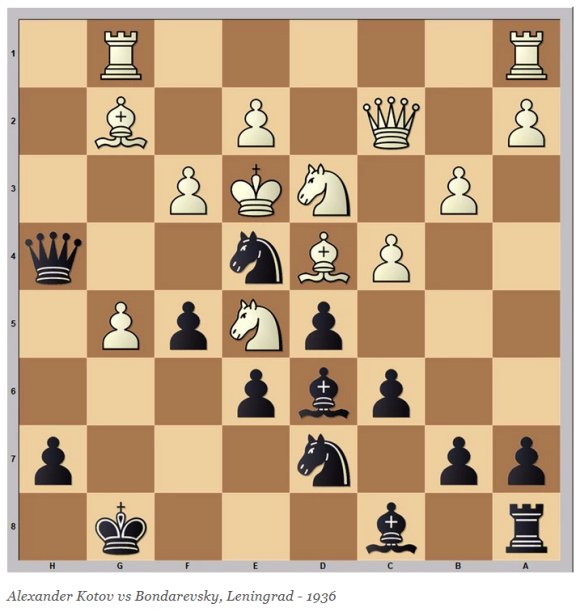
I’ll be on the road all day today. Here’s something beautiful for you to puzzle over.

Black to move. (Solution here.)

Some Humility, Please

I have nothing prepared for publication tonight — I was too busy all day, and I went to the VDare Christmas party this evening — but I’d hate for you to go away empty-handed, so I’ll offer you this excerpt from Richard Weaver’s essay Up From Liberalism:

The attempt to contemplate history in all its dimensions and in the fullness of its detail led directly to the conviction that this world of substantial things and substantial events is the very world which the Leftist of our time wishes to see abolished; and such policy now began to appear egotistical and presumptuous. I am disinclined to the view that whatever exists necessarily has a commission to go on existing. On the contrary, I have a strong tendency to side with the bottom dog, or to champion the potential against the actual if the former seems to have some reason behind it; and I am mindful of the saying that God takes delight in bringing great things out of small ones. To this extent, I am a reformer or even a subverter. But I feel that situations almost never present themselves in terms so simple. They usually appear in terms like these: We have before us a tremendous creation which is largely inscrutable. Some of the intermediate relationships of cause and effect we can grasp and manipulate, though with these our audacity often outruns good sense and we discover that in trying to achieve one balance we have upset two others. There are, accordingly, two propositions which are hard to deny: We live in a universe which was given to us, in the sense that we did not create it; and, we don’t understand very much of it. In the figure once used by a philosopher, we are inhabitants of a fruitful and well-ordered island surrounded by an ocean of ontological mystery. It does not behoove us to presume very far in this situation. It is not a matter of affirming that whatever is, is right; it is a recognition that whatever is there is there with considerable force (inertia even being a respectable form of force) and in a network of relationships which we have only partly deciphered. Therefore, make haste slowly. It is very easy to rush into conceit in thinking about man’s relationship to the created universe. Science paved the way for presumption, whether wittingly or not; and those political movements which appeal to science to vindicate their break with the past have often made the presumptuous attitude one of their tenets. I found myself in decreasing sympathy with those social and political doctrines erected upon the concept of a man-dominated universe and more and more inclined to believe with Walt Whitman that “a mouse is miracle enough to stagger sextillions of infidels.’

You can read the whole thing here. It is well worth your time.

We Will Not Flag Or Fail

A reader from an Australian metropolis wrote me a little while back to describe the social and emotional difficulties of being a Right-thinking outlier in an overwhelmingly, and so often unreflectively and oppressively, Leftist culture. He needed some bucking up, I thought, and so I offered the following (slightly edited) reply. I don’t think he’ll mind my reprinting it here in the hope that it might offer some comfort to others in the same lonely predicament.

Dear ____,

I understand what you’re going through. I face exactly the same issues in my own relationships, all the time.

It’s very hard to push back effectively. There is a tremendous soggy weight of dogma always pressing down; it’s as if you are caught under a big wet circus tent that you have to lift every time you want to stand up to speak your mind.

Or perhaps the better metaphor is the one I’ve always used in the past: that we are swept along in a powerful stream, and as long as we drift with the current we don’t feel its power. Most people drift along in little groups, focusing only on each other, but some of us look at the banks of the river, and notice that we are being swept away to an unfamiliar landscape far from our home. We plant our feet on the bottom and try to grab hold of the people we care about, but immediately we feel the enormous power of the current, and it is all we can do to resist. Meanwhile our friends just think we’re acting very strangely indeed, and making things very unpleasant for ourselves and for them. It’s so much more pleasant to drift, you see, especially when everyone else is — and as soon as we put our feet down on the bottom everyone else is suddenly moving away with the current. (To them, it seems as if we are moving backward.)

All I can say is to tell you what I do — how I’ve managed to live in such a condition without going mad:

I tell myself that no matter what everyone else thinks, I’m going to look at the world as frankly as I can, gather my own information, and understand it as clearly as I can manage. I read a lot of history, and I learned a while back that if I want to learn the truth about history, I can’t learn it just from people writing about it now; I also have to read the books that were written while it was happening.

I seek out people who are also resisting the current. They are out there, and it is important to know that they are out there.

I refuse to be broken. I am blessed with reason and intelligence and wisdom, and I will not lay them aside. I will believe in myself, and I will be faithful to myself.

I have friends who respect my intelligence. I try to show them a living example of someone who doubts and questions and denies their secular religion, and who is yet still a friend they can respect. This is, I think, the most effective thing I can do: to show them that a decent, intelligent man of firm moral principles can question the things they take for granted and not be struck by lightning.

I want to make them doubt, even just a little, even just for a moment, the unholy doctrine of this new secular religion. If I can do that, if I can make that tiny crack in the wall, the flowing power of Truth will do the rest. I will believe that Truth is real, that it is mighty, and that it will prevail.

And I write. I write for people that, like me and you, need to know there are others out there. And I do it for myself, to bind and organize my understanding.

Okay, that’s enough, I think. Sorry to ramble on so. But you get the picture.

As Churchill said:

“Never give in. Never give in. Never, never, never, never””in nothing, great or small, large or petty””never give in, except to convictions of honour and good sense. Never yield to force. Never yield to the apparently overwhelming might of the enemy.’

Best,
Malcolm

P.S. Be of good cheer. The tide may be turning. The great, sustaining comfort is that we are Right, and they are wrong. Magna est veritas!

Travel Advisory


About Time

I was gratified to see President Trump announce today that the United States will recognize Jerusalem as Israel’s capital, and will move its embassy there.

Mr. Trump summed it up succinctly: Israel is a sovereign state, and a U.S. ally. If a state cannot even choose its own capital city, then it is not sovereign. If an ally will not recognize that choice, then it is not an ally.

En Passant

This is no small thing: Google’s “Alpha Zero” AI, after taking just 4 hours to teach itself chess, played 100 games against the strongest dedicated chess engine, Stockfish, with decisive results: it won twenty-eight games, drew seventy-two, and lost… zero.

We had a good run, humans.

Q.E.D.

From the Telegraph:

Don’t call us snowflakes – it damages our mental health, say young people

Sorry, kids. It’s just that “fragile, helpless, trembling little mice” seems such a mouthful by comparison. We’ll try to come up with something else.

Maybe “towering, invincible colossi”, with a little wink.

O, That I Were A Glove Upon That Hand, That I Might Touch That Cheek!

This just in, from the Daily Mail:

Demand for anal bleaching soars by 23% as women follow in the footsteps of celebrities including Sophie Kasaei, Charlotte Crosby and Kourtney Kardashian

I notice Grace Kelly, Audrey Hepburn, and Queen Elizabeth didn’t make the cut there, for some reason. I guess times have changed.

And after all, as Gavin McInnes remarked online: you only get one chance to make a first impression.

Service Notice

We’ve been having a server-side problem that caused commenters to see the comment-form populated with the name and email of whoever commented previously. Bluehost tells me the issue is now fixed. Please let me know if you’re still seeing this.

The Perjury Trap

Here’s an informative piece on the Flynn affair by Tyler Durden. Key point: the purpose of the interrogation of General Flynn by the FBI was never to determine the content of Flynn’s conversations with the Russians — because the FBI already had the transcripts.

I will add: just how did the FBI have these transcripts of a private conversation by a U.S. citizen, when his identity should, by law, not have been revealed? Answer: only because of the “unmasking” of General Flynn’s name in those transcripts, in the waning days of the Obama administration.

Service Notice

Once again this site is bedeviled by a back-end problem that causes new commenters to see the previous commenter’s information in the comment box. When this last came up, in May, it was due to a server-side caching issue at Bluehost that took me a lot of time and effort on the phone to get fixed. Now it’s back, and I’m not at all happy about it. I’ll call them tomorrow, and see what I can do. I’m reluctant to move — it would be an enormous nuisance, and I’ve been a Bluehost customer since 2005 — but this really is exasperating.

Commentary On The Steinle Verdict, And A Repost On Civil War

Over at Maverick Philosopher, Bill Vallicella comments on the Kate Steinle verdict, in a post rightly titled A Struggle for the Soul of America. After quoting a passage from this essay by the indispensable Heather Mac Donald (an essay you must be sure to go and read in full), Bill adds:

There you have it. Which side are you on?

Will you tell me that we need to ‘come together,’ and ‘drop the labels,’ and ‘find common ground’? There is no common ground here. Either you stand for national sovereignty and the rule of law, or you don’t. Either you distinguish between legal and illegal immigration or you don’t. Either you stand for the defunding of ‘sanctuary’ jurisdictions or you don’t, leaving aside the denialist lie that there are no such jurisdictions!

Bill’s right: increasingly, there simply is no common ground in what I recently heard someone describe as “this walking carcass of a nation”. Order may yet be imposed, but when the organic and horizontal ligatures that bind a population into a nation have rotted away — as they have in America — then it will be an artificial, top-down order of increasingly authoritarian style.

Bill quotes a reader of his, who emailed:

At this point I believe that a shooting civil war in this country is inevitable; a government that fails in its first duty to protect its citizens is no longer legitimate, and the Left will not leave except it is forced out.

Bill responded:

No reasonable person could want full-on civil war and the destruction of civil order. Everyone should calmly reflect on just how horrible that would be.

Quite so. I recalled that I had written something about this myself, and looking through my archives found a post from two years and a day ago, entitled This Ain’t No Disco. I repost it in full below; I invite you also to visit the original post to read the discussion in the comment-thread.

*                *                *                *                *


In a recent post I remarked that, with bitterly opposing forces tearing at our rotting social framework, every public shock ”” in this case, the San Bernardino jihad assault ”” is a hammer-blow that “strains the joints and widens the cracks’. “Each time,’ I remarked in a subsequent comment, “we split apart a little more.’

Commenter “pangur’ asked:

Why is this bad? Why is it that we should make common cause with our enemies? A longing for an America that no longer exists is at best sentimental, and at worst destructively futile. Time to move forward, and apart.

The point is a good one. If, as I believe, the rot is already too deep, the disease too advanced, the rifts too wide, the enmity too bitter for the nation to recover, then the only hope for the restoration of something built on the old foundations of Western greatness will require, first, that this tottering edifice ”” this walking corpse ”” collapse. Indeed I think this is already underway.

Where I think I part company with many on the dissident Right ”” in particular, those who call themselves “neoreactionaries’, most of whom are, I think, several decades younger than I ”” is that so many of them seem to have a kind of breathless excitement about all of this; it seems they just can’t wait for all the fun they are going to have watching the apocalypse, and then rolling up their sleeves to show everyone how it ought to have been done. This seems to me profoundly, childishly, foolishly, heart-breakingly naÁ¯ve.

If this Fall happens ”” slowly at first, probably, and then quite suddenly ”” it will not be fun, and it will not be exciting. It will be awful. There will almost certainly be terrible suffering and dislocation; chaos, violence, plunder, terror, and despair. A great many irreplaceable treasures ”” our children’s ancient birthright and heritage ”” will be forever lost.

Whether we will be able to build something worthwhile upon this rubble is doubtful at best, and even if we manage it, it may take a very long time. High civilizations, and in particular high-trust societies, do not grow upon trees, and they are by no means the default human condition. Whatever follows a general collapse, or a civil war, in the West will not be a swashbuckling plot from a Robert Heinlein novel; it is far more likely to be a time of brutality, poverty, suffering, uncertainty, and fear.

Others may snap their fingers at the noble experiment now coming apart in America, and may imagine, on no practical experience, that they will know how to do it better. Not I. I will mourn and grieve for the great Republic we have, in our great unwisdom, so recklessly destroyed. Perhaps, as is received doctrine amongst neoreactionary sorts, the American system was doomed ab ovo; it carried in its very democracy the disease that would kill it. I have often said the same myself. But the men who framed this system knew this all too well themselves, and they knew and named the essential qualities and principles that might have inoculated us: qualities that we not only have failed to cherish, but now actively despise.

What makes us think we will get it right next time?

Benched!

By now you’ve all heard all about the suspension of ABC News reporter Brian Ross for his story on Friday claiming that General Mike Flynn had copped a plea for lying to the FBI about his contacts with Russia. Ross initially reported that, during the campaign, Donald Trump had told Flynn to arrange meetings with representatives of the Russian government — something that would support the idea that the Trump campaign had “colluded” with Russia to influence the outcome of the election.

This was big news — and for investors bullish on the idea of an impending tax-reform bill, continuing abatement of burdensome regulation, and other Trumpian economic medicaments, it was bad news as well. It had an immediate effect on the stock market, which plummeted. The Dow fell over 350 points. It’s not good when that happens — a lot of investors have triggers that sell shares when the price dips below a preset threshold, and the wave of selling causes a cascade of further price-drops. An enormous amount of wealth was destroyed.

But wait! Along comes ABC News again, with a “correction”: Mr. Trump’s instructions to General Flynn were given after, not before, the election, and so were simply part of an incoming administration’s normal diplomatic outreach. Whoops!

ABC realized that some show of accountability had to be made, and so announced that Mr. Ross would be suspended for four weeks. Without pay!

Am I alone in noticing a similarity here to the penalties imposed in professional sports for bad behavior? The analogy is almost perfect, if you understand that this is really a Great Game, played by two opposing teams as their fans cheer them on from the sidelines. Mr. Ross, in his zeal, went a little too far, and the officials threw a flag. Now he is going to have to sit out a few plays.

Meanwhile, more than a few people have pointed out that the effect on the markets of this foul play, and the huge financial losses that resulted, my be legally actionable. I have no idea whether that’s so, but I hope someone gives it a try.

Service Notice

Ugh. Food poisoning. There were things I’d have liked to comment on today, but it will have to wait.

Do You Feel The Ground Cracking?

The Kate Steinle verdict is in: the accused was found guilty only of a weapons charge, and was completely exonerated in causing her death — despite having undisputedly fired the shot that killed her.

Frankly, I am not surprised, given the venue. But this will not sit well.

A Million Miles Away

Sunset tonight on the tidal flats at Wellfleet Harbor:


Links

It’s been quite a while since I’ve put up one of these omnibus posts. Let’s see what I have lying around here:

‣   Jonathan Bowden on the Soviet gulag.

‣   WWII waist-gunner training cartoon, featuring none other than the great Mel Blanc.

‣   Twelve ways artificial wombs will change the world.

‣   Anatoly Karlin: A World of 1,000 Nations.

‣   Whiteness.

‣   Why the AR-15 platform is an essential weapon.

‣   The slippery slope.

‣   Why transgendered people in the military is a bad idea.

‣   The Globe drops the mask.

‣   Five Thirty Eight statistician changes her mind on gun control.

‣   Sex differences in cognition, from Psychology Today.

‣   Meat: a love story.

‣   Persecuting the heretic at a major Canadian university.

‣   Contra “Net Neutrality”.

‣   A remarkable Swedish artist.

‣   Inconvenient Truths About Migration.

‣   Pigford revisited. (One of the great leftie government scams of our age.)

‣   The genetic underpinnings of intelligence are coming into view. (Note: that which is genetic is heritable; that which is heritable is subject to selection, natural or otherwise; that which is subject to selection will vary among populations exposed to different selection pressures.)

I apologize: many of these deserve detailed posts of their own, with commentary and analysis, but I just haven’t had the oomph for it lately. I don’t know what’s wrong with me these days.

Ms.-Management

Well, the sexual-harassment scalps keep piling up. Today it’s Matt Lauer (fine with me; I never could stand the guy), Garrison Keillor, and, if I recall correctly, some executive at NPR (who can keep track anymore?).

The wholesale termination of all these male media bigwigs will likely have a consequence that, so far, I haven’t seen anyone talking about (though I might have missed it): that the mainstream media will be, more and more, controlled by aspiring, overwhelmingly liberal, women. This will be something of an accelerant of existing cultural trends.

I can hardly wait.

I Predict

I’m just going to lay down a marker here, so I can say “I told you so” years from now.

The world’s climate will clearly have become significantly colder within, at most, one decade, and we will be looking back at global-warming hysteria and wondering how we could have been such fools.

A People’s Tolerance For Change And Adaptation Should Not Be Strained Beyond Its Limits

With a hat-tip to Bill Vallicella, here’s a brief and worthwhile article on immigration.

Go and read the whole thing. You may notice some overlap with the ideas expressed in my own post Simple Common Sense About Diversity And Immigration, from 2013.

Happy Thanksgiving

… to all of you, as always. Thank you for reading and commenting.

As we noted recently, gratitude is perhaps the most important requirement for a happy life. We have much to be thankful for today in America; as a nation we can be thankful, especially, for the mortal calamity we avoided a year ago this month.

May you all put your worries aside for a day, and enjoy to the fullest all the blessings of hearth and home, family and friends.

It’s All Too Much

Richard Fernandez:

Some social commentators have noted a mood of disillusionment. “Millennials report depression in higher numbers than any previous generation”, up to one in five. People appear to be tuning out of politicized “comedy”, sports and entertainment, exhausted by the public frenzy. It’s a direct consequence of the fall of the Narrative. The irony is having given people apps to order pizza, Tinder date or a cab within minutes we have yet to create an app that gives them a reason to live, where the starveling depression-raised Greatest Generation could find it in themselves to cross a fire-swept beach in hope.

Here.

Does This Look OK To You?

Here’s a timeline of the Uranium One caper. (Caveat lector: I haven’t independently confirmed every detail, but it seems about right.)

See also Andrew McCarthy’s summary here, and his discussion with John Batchelor, here.

Information Please

Is it me, or does the Las Vegas shooting seem to have dropped right down the memory hole? We still don’t have a clear motive; there’s the laptop with the missing hard-drive; the time-line has gone through several revisions, and there was the very curious story of the actions of the hotel security guard — who was shot in the leg — in the days following the shooting. What’s going on?

Thoughts For Thursday

In this short video clip, Dennis Prager names the single trait that, in his opinion, is the key to happiness.

I’m not at all sure that it all boils down to a single factor — but I’ll agree with him that if it does, he’s picked the right one. And, it being late November, the timing is apt.

Dangerous Game

There’s a been a fuss about President Trump’s plan to remove the Obama-era ban on elephant trophies. Bien-pensant liberals greeted the news with uncomplicated moral revulsion, along the following lines:

1) Elephants are marvelous, beautiful, intelligent animals.
2) Hunting marvelous, beautiful, intelligent animals is always morally wrong.

Therefore:

3) Supporting a policy that endorses, or merely fails to forbid, the hunting of elephants is morally wrong.

“But,” you might ask, “if hunting elephants is obviously and objectively evil, why would our President want to lift the existing ban?”

That’s an easy one. It requires no thinking at all, in fact; just an axiom:

1) Donald Trump is an evil man.

Q.E.D. The modern liberal mind is, as far as I can tell, content to leave it here. The process is the usual one:

1) Notice some unfairness or unpleasantness in the world.
2) Feel badly about it.
3) Blame somebody. (In this case, it’s First World males with … guns.)
4) Get the government to DO SOMETHING!!!
5) Relax; feel better.
6) Go to 1).

Does any of this seem to you somehow less than rigorous? Right, me too. Maybe there’s another way we could look at it. How about this:

1) Elephants are marvelous, beautiful, intelligent animals.
2) They live, however, in a place that is crowded with humans, and very poor.
3) There are powerful incentives for the locals to kill them. Elephants damage farmland, and their tusks and other body-parts fetch high prices on black markets.
4) First-world hunters with money to spend will pay a lot to bag an elephant. Between guide fees, trophy fees, and VAT, the price can be well over fifty thousand dollars. That’s a huge amount in a typical African economy.
5) This makes elephants a highly profitable asset, and strongly encourages the management of them as a sustainable resource.
6) If all First World nations were to ban the hunting of elephants, this economic incentive would be destroyed. (You can’t charge anything close to the same fees simply to go and look at them.)
7) When elephants are no longer a profitable resource, the incentives to preserve them as such go away.
8) Just sending money to the local governments to spend on elephant-preservation won’t do, due to corruption. To get poor Africans actually to manage elephants as a valuable and renewable resource requires an ongoing and direct economic incentive.
9) In the absence of such an incentive, elephants will simply be poached to extinction. It doesn’t matter if it’s illegal, or if it seems immoral to comfortable Western liberals. (This is Africa we’re talking about here, folks.)

Therefore:

9) As distasteful as it may be, allowing the hunting of elephants may in fact be the best, perhaps the only, way, to preserve their continued existence.
10) A trophy ban, simple and morally gratifying as it surely is, might well have the unintended consequence of hastening the extinction of these marvelous, beautiful, intelligent animals.

The problem, of course, is that 9) and 10) describe how things are in the actually existing world, as opposed to the neat little model of it that so many of us rely upon for our opinion-making. In that actually existing world, the consequences of our actions are usually complex and hard to predict — which makes moral clarity elusive, and so should counsel caution.

We’ll let James Burnahm have the last word:

THE GUILT OF THE LIBERAL causes him to feel obligated to try to do something about any and every social problem, to cure every social evil. This feeling, too, is non-rational: the liberal must try to cure the evil even if he has no knowledge of the suitable medicine or, for that matter, of the nature of the disease; he must do something about the social problem even when there is no objective reason to believe that what he does can solve the problem””when, in fact, it may well aggravate the problem instead of solving it.

… The harassed liberal is relentlessly driven by his Eumenidean guilt. It does not permit him to “let well enough alone’ or “stick to his own cabbage patch’ or decide that the trouble is “none of his business’; or to reflect that, though the evil is undoubtedly there and he is sincerely sorry for its victims, he doesn’t understand damn-all about it and even if he did he hasn’t got the brains and resources to fix it up. He may not know much, generally speaking he does not know much, about economics, but that lack in no way inhibits him from demanding that industry and government do this, that or the other to cure unemployment; he may not have a single serious idea about strategy and international affairs, but he will nevertheless join his fellow liberals in calling for grandiose measures concerning arms, alliances, bases, and colonies; he may have no acquaintance with the actual problems of mass education, but he will nevertheless insist on the most far-reaching reforms of the school system.

… The good intention””slum clearance, racial equality, better health, decolonization, high standard of living, peace””plus plenty of action is assumed to guarantee the goodness of the program; and the badness, one might add, of those reactionaries who are rash enough to question it.

— Suicide of the West, p 221.

The Cracked Brass Bell Will Ring

Off to see King Crimson at the Beacon Theater tonight. They are a remarkable ensemble, including, among others, two of my favorite drummers, Pat Mastelotto and Gavin Harrison, the great bassist Tony Levin and — sui generis — the Gurdjeffian guitarist and musical innovator Robert Fripp.

I’ve never seen them perform, and I’m happy to be doing so at last.

Nuh-Uh

Well! No sooner do I write about how Bill Clinton seems to be gliding smoothly across the surface of our latest moral panic, than prominent Democrats seem suddenly to notice that the man is in fact, as so many of his victims had been trying to tell everyone for decades, a loathsome sexual predator. I had no idea this humble blog was so influential!

Here, for example, is New York’s junior senator, Kirsten Gillibrand, honking that Mr. Clinton should have resigned when his usage of Monica Lewinski as a disposable sexual plaything became, despite his lies about it all, public knowledge.

Sorry, toots. If that’s the way you really feel about it, you should have distanced yourself from these grifters long ago, rather than toiling last year to return them to the White House. To do so only now is, obviously and insultingly, naked political self-interest and nothing more. What do you take us for?

Meanwhile: Al Franken. As someone said online today, this will give us all chance to brush up on how to spell “schadenfreude”.

Is it any wonder that people despise politicians?

What’s In A Name?

Over at American Greatness, Roger Kimball explains why he’s given up on Trumpism.

Let’s Call The Whole Thing Off

Yesterday a the New York Times published an opinion piece by a black academic, one Ekow Yankah. The essay is called Can My Children Be Friends with White People?

Professor Yankah’s answer is no, for the reason that black people must assume that every white person is, unless proven otherwise, such a virulent racist as to pose a direct and immediate threat of “rending, violent, often fatal betrayal.” (That this is certain is, apparently, demonstrated by the fact that Hillary Clinton did not win the last election.)

I considered putting up a post about this yesterday, but didn’t, as a familiar kind of fatigue quickly set in. I did offer a Tweet suggesting that John Derbyshire might have an opinion about the publication of this item, and noted that a chorus of voices were asking online about how it would seem if a white person wrote such an article, but beyond that I felt I had nothing much to add. This is where we’ve got to, and it isn’t going to get any better.

Today my friend Bill Vallicella sent me an email with a link to a response by Rod Dreher. It says, pretty much, what needs saying. For example:

So, let me get this straight: The New York Times published an op-ed by a black man who says that all white people look alike, and seem like they are a threat, even if they treat him kindly. If a white man wrote a column saying that all black people look alike, and seem like a threat to him, even if they treat him kindly, do you think The New York Times would publish it? The question is absurd.

Well, right. But again: this is where we’ve got to (and where the New York Times has got to).

Dreher quotes this passage, in which the author of the article tries to make sure that he’s just a big-hearted guy who’s trying to do his best:

We can still all pretend we are friends. If meaningful civic friendship is impossible, we can make do with mere civility ”” sharing drinks and watching the game. Indeed, even in Donald Trump’s America, I have not given up on being friends with all white people.

Thanks but no thanks, replies Dreher:

What a jerk. Why would any white person want to spend time with a guy who thinks he’s doing them a favor by granting them the absolution of his friendship? “If [particular whites] are not clearly allies, they will seem unsafe to me,’ he writes. How does a white person signal clear allyship? Why should any white person take the risk of being friends with this guy, knowing that if she says something that offends him politically, he will immediately consider her a racist threat, and withdraw friendship?

… You know what? Many white people who might have been Prof. Yankah’s friend will now choose to keep away from him, because they feel judged by him, or they will be afraid to speak around him. He will take that as a further sign of racism. And if white children shun the Yankah children because their father has taught them that whites are not to be trusted or befriended, the Yankah kids will understandably take that as a sign that their father was right. Well done, Dad, well done.

Yes, well done. And so: what do we do now? I think it’s fair to say that civil society, to function at all, requires at minimum a default presumption that we all have enough in common with our fellow citizens to make it at least possible that we could somehow be friends. If, as Professor Yankah insists, even this (very) low bar is too high, then social cohesion is impossible, and the nation is doomed. And when it comes to cohesion, if a faction insists that comity with them is impossible, then it is. When white people suggest that the races are better off not trying to get along, they are called, nowadays, “white supremacists”. What, then, should we say about Ekow Yankah?

An exercise for the reader: what do you think the New York Times expects to accomplish by publishing something like this?

How Does He Do It?

It seems that hardly a day goes by lately without the ruination of another prominent man by allegations of sexual misconduct.

Somehow, though, Bill Clinton sails along. Can there be any doubt that this blackguard is a sexual predator of the first order? Of course not; the allegations are legion, including a highly plausible accusation of rape — and that he used a naive and winsome 21-year-old Oval Office intern as a sex toy and a humidor is a matter of public record.

What is it about this guy that makes him uniquely invulnerable, even as the Clinton star begins to fall? Is all of his infamy — his lies, his infidelities, his serial abuse of women and his nonchalance about destroying them if they dare to make trouble later — just “grandfathered in”? Does he still wield some dark and terrifying power over his former courtiers and thralls, even in decline?

Whatever it is, you have to hand it to the guy. Then go wash your hand.

Tales From The Swamp

Once again, here’s the indispensable Andrew McCarthy, former Federal prosecutor, on the Mueller investigation. In his latest essay, he compares it to the way the Obama DOJ handled its investigation of Hillary Clinton. The contrast is instructive, and sorely vexing.

Freeman Dyson, Heretic

Our e-pal Bill Keezer sent along a link today to an essay on climate change by the eminent physicist Freeman Dyson. As it happened I offered a post about this very essay ten years ago, and it’s at least as relevant now as it was then.

Have a look. My post is here, and the Dyson essay is here.

Blam!

The view out my front window just now (click for larger version):

click to enlarge
 

These guys should really pay more attention to the calendar.

Service Notice

Back in May we had a problem with server-side caching at Bluehost. The symptom was that commenters would see the comment-box pre-populated with the name and email of whoever had commented last. Please let me know if you see this happening again now. (I will be sorely vexed with Bluehost if so.)

To clear the form you can force a refresh by pressing F5 before leaving your comment.

Veritas

Worried that our culture is in decline? Relax.

In fact, the more you can relax, the less this will hurt.

Oh Goody

Here’s the future of the automobile, from former GM, Ford, and BMW executive Bob Lutz.

I love driving. Glad I got the chance, I guess.

Somebody’s Gotta Do It

The key weakness of liberalism — which, to be fair, has at times done much to improve society — is that it must assume as “given” the existence, and the continuing existence, of the society it hopes to improve. But liberalism, by its very nature — its pacifism, its sentimentalism, its opposition to hierarchy, its prioritization of the subjective over the objective, its orientation toward the feminine principle — has no capacity for assuring and defending the survival of its host society in mortal struggles against external, more illiberal enemies.

This is why warriors are seldom liberals.

Liberalism knows that it is parasitic upon its warrior class for its survival. It knows also that this relation is not symmetrical. This is why liberals generally dislike the military: it reminds them of their weakness.

Love Story

I enjoyed this very much: Mark Knopfler playing his guitars, and talking about playing guitar. (The clip is hosted at Laughing Squid, where it’s described as Mr. Knopfler giving a “wonderful guided tour of his guitar collection” — but that isn’t what it is at all, as older and wiser readers will understand.)

Here.

Sacred And Profane

The transgendered have become holy objects because, unlike those of us who are frozen in a conventional relation between our sex and our gender, and are trapped in the matrix of objective and pre-existing natural categories, the transgendered demonstrate the supremacy, and so the apotheosis, of the subjective.

In a secular religion that denies the metaphysically transcendent, the subjectivity of the individual must become the Divine; the creativity of the individual must be radically enhanced to encompass the world-creating (and world-destroying) power formerly ascribed to God. Transgenderism shows that this is possible. It is therefore of tremendous ideological importance, and so becomes a holy blessing, a special gift.

Part And Parcel

A Muslim terrorist in a rented truck mowed down pedestrians in New York today, killing eight people. At a news conference, Governor Cuomo assured us that the killer was a “lone wolf”, and that there was no evidence of a “wider plot”.

Rubbish. The “wider plot” has been in effect for fourteen centuries. It continues unabated today, and this man was part of it — as the next one will be, and the next, and the next.

Meanwhile, the Mayor announced that we will go forward “stronger than ever”. Stronger than ever, that is, with more barricades, security checkpoints, travel restrictions, militarized police, and ubiquitous surveillance.

Bleed, rinse, repeat. This is the future we have chosen.

Once again, I will say the Obvious Thing:

Allowing mass Muslim immigration is the stupidest and most irreversibly self-destructive thing that any Western nation can do.

A Diagnosis Of Liberalism, 1964

I’ve been reading James Burnham’s Suicide of the West. Published in 1964, it is an anti-liberal jeremiad, and a corking good one. It also anticipates a number of themes that have become central tenets of both traditional-conservative and neoreactionary criticism.

I’m still only about three-quarters of the way through, but I’ll offer some excerpts.

Burnham begins by noting as a simple fact — devoid of political spin — that the West is shrinking:

For the past two generations Western civilization has been shrinking; the amount of territory, and the number of persons relative to the world population, that the West rules have much and rapidly declined.

Is this “suicide”?

I know, again from direct experience of discussion, argument and conversation, that my use of the word “suicide’ to describe what is happening to the West is even more disturbing to many persons than the use of such words as “contraction.’ “Suicide,’ it is objected, is too emotive a term, too negative and “bad.’ Oddly enough, this objection is often made most hotly by Westerners who hate their own civilization, readily excuse or even praise blows struck against it, and themselves lend a willing hand, frequently enough, to pulling it down.

Abetting this diminution of the West is, to Burnham, central to liberalism:

I do not mean that liberalism is””or will have been””responsible for the contraction and possible disappearance of Western civilization, that liberalism is “the cause’ of the contraction. The whole problem of historical causation is in any case too complex for simple assertions. I mean, rather, in part, that liberalism has come to be the typical verbal systematization of the process of Western contraction and withdrawal; that liberalism motivates and justifies the contraction, and reconciles us to it.

Burnham identifies the self-coordinating liberal hegemon for which Mencius Moldbug coined the term “the Cathedral” (my emphasis):

In sum, then: liberalism rather broadly designated””ranging from somewhat dubious blends to the fine pure bonded 100 proof””is today, and from some time in the 1930’s has been, the prevailing American public doctrine, or ideology. The predominant assumptions, ideas and beliefs about politics, economics, and social questions are liberal. I do not mean that a large majority of the population is, by count, liberal. Perhaps a majority is liberal, but that is hard to determine accurately. What is certain is that a majority, and a substantial majority, of those who control or influence public opinion is liberal, that liberalism of one or another variety prevails among the opinion-makers, molders and transmitters: teachers in the leading universities””probably the most significant single category; book publishers; editors and writers of the most influential publications; school and college administrators; public relations experts; writers of both novels and non-fiction; radio-TV directors, writers and commentators; producers, directors and writers in movies and the theater; the Jewish and non-evangelical Protestant clergy and not a few Catholic priests and bishops; verbalists in all branches of government; the staffs of the great foundations that have acquired in our day such pervasive influence through their relation to research, education, scholarships and publishing.

I’ve spoken often (for example, here and here) about the futility of argument across the gulf that separates liberals from the rest of us. Rational discussion, at its best, is like making and testing theorems — but two people can never agree that a theorem is proven if they are starting from incommensurable axioms. If one is embedded in a purely homogeneous ideological environment, however, political and moral axioms can often go completely unexamined. Burnham writes:

In short, liberals differ, or may differ, among themselves on application, timing, method and other details, but these differences revolve within a common framework of more basic ideas, beliefs, principles, goals, feelings and values. This does not mean that every liberal is clearly aware of this common framework; on the contrary, most liberals will take it for granted as automatically as pulse or breathing. If brought to light, it is likely to seem as self-evident and unquestionable as Euclid’s set of axioms once seemed to mathematicians.

It is a common observation lately that political polarization has deepened in America, that the center is increasingly hollowed out. Burnham saw this happening, though, even in 1964:

The ideological spectrum between the leftmost wing of liberalism and the rightmost wing of conservatism is not an evenly graduated gray continuum. The L’s and the C’s are bunched; and we can usually tell the difference intuitively. A connoisseur, in fact, can tell the difference intuitively just from a momentary sample of rhetoric at a Parent-Teacher meeting or a cocktail party, even without a specific declaration or proposal to go by, much as a musical connoisseur can distinguish intuitively a single phrase of Mozart from a phrase of Brahms.

Burnham comments on the remarkable coordination of liberal opinion:

The judgments that liberals render on public issues, domestic and foreign, are as predictable as the salivation of Pavlovian dogs. Whether it’s a matter of independence for Pogoland or school integration for some Southern backwater; the latest loyalty oath or a nuclear test ban; the closed shop or the most recent inquiry of the Committee on Un-American Activities; foreign aid or poll taxes; the United Nations or Fair Employment; whether it’s X, Y or Z, you can know in advance, with the same comforting assurance with which you expect the sun to rise tomorrow, what the response of the liberal community, give or take an adverb or two, will be. The editorials in the Washington Post, New York Times, New Republic, or indeed Paris’ Le Monde or London’s Sunday Observer; the liberal columns, speeches and sermons; the deliberations of the faculties of any Ivy League university; the discussions of the Foreign Policy Association, League of Women Voters or American Association of University Professors””the small flourishes of special rhetoric in their commentaries are like the minor decorations permitted on a rigorously fixed style of painting, architecture or music.

This last observation preceded Neoreaction’s ur-text by 45 years. In 2009, Moldbug wrote:

Except for a few unimportant institutions of non-mainstream religious affiliation, we simply do not see multiple, divergent, competing schools of thought within the American university system. The whole vast archipelago, though evenly speckled with a salting of contrarians, displays no factional structure whatsoever. It seems almost perfectly synchronized.

There are two explanations for this synchronization. One, Harvard and Stanford are synchronized because they both arrive at the same truth. I am willing to concede this for, say, chemistry. When it comes to, say, African-American studies, I am not quite so sure. Are you? Surely it is arguable that the latter is a legitimate area of inquiry. But surely it is arguable that it is not. So how is it, exactly, that Harvard, Stanford, and everyone else gets the same answer?

I’m afraid the only logical alternative, however awful and unimaginable, is the conclusion that Harvard and Stanford are synchronized because both are remoras attached, in some unthinkable way, to some great, invisible predator of the deep – perhaps even Cthulhu himself.

Certainly, the synchronization is not coordinated by any human hierarchical authority. (Yes, there are accreditation agencies, but a Harvard or a Stanford could easily fight them.) The system may be Orwellian, but it has no Goebbels. It produces Gleichschaltung without a Gestapo. It has a Party line without a Party. A neat trick. We of the Sith would certainly like to understand it.

Burnham goes to great lengths in this book to identify the defining postulates of liberalism. (He settles, finally, on 19 of them; I will sum them up in a later post.) At the most general level, the idea is this:

Liberalism is confident that reason and rational science, without appeal to revelation, faith, custom or intuition, can both comprehend the world and solve its problems.

If reason and science can indeed solve the world’s problems, then what does the liberal worldview imagine stands in the way? The answer is: ignorance, and faulty institutions. Both of these the liberal imagines to be remediable, by carefully controlled education and enlightened government reforms.

There is, beneath this optimistic outlook, another axiom: that human nature is infinitely malleable.

Inside the liberal system of ideas … human nature is changing and plastic, with an indefinitely large potential for progressive development. Through reason, freed from superstition, authority, custom and tradition, human beings can discover the truth and the road toward the betterment of society. There is nothing inherent in human nature that prevents the attainment of peace, freedom, justice and well-being””of, that is, the good society. The obstacles are ignorance and faulty social institutions. Because both these obstacles are extrinsic and remediable, historical optimism is justified. Social problems can be solved; the good society can be achieved, or at any rate approximated.

… For liberalism, the direct purpose of education cannot be to produce a “good citizen,’ to lead toward holiness or salvation, to inculcate a nation’s, a creed’s or a race’s traditions, habits and ceremonies, or anything of that sort. Nor is there any need that it should be, for the logic of liberalism assures us that, given the right sort of education””that is, rational education””the pupil, in whose nature there is no innate and permanent defect or corruption, will necessarily become the good citizen; and, with the right sort of education universalized, the good citizens together will produce the good society.

… The child, for liberalism, approaches the altar of education””for the school is, in truth, liberalism’s church””in all his spiritual nakedness as a purely rational, or embryonically rational, being, shorn of color, creed, race, family and nationality: the Universal Student before the universal teacher, Reason.

Another essential quality of liberalism is the rejection of natural hierarchies and discriminations:

In liberalism’s relativist theory of truth and democratic political doctrine, as in its account of human nature, there is no room for qualitative distinctions among men.

Burnham addresses in detail the important role of guilt in the liberal worldview. He notes that statism provides a remedy (my emphasis):

Let us consider the situation of a member of our affluent society, and let us assume him to be from the more rather than less affluent half, who is no longer deeply committed in spirit to the interlocked Christian doctrines of Original Sin, the Incarnation and Redemption, which constitute the Christian solution. His guilt nevertheless exists; he is conscious of it, and feels the anxiety that it generates. What is he going to do about it, and think about it? Liberalism permits him to translate his guilt into the egalitarian, anti-discrimination, democratist, peace-seeking liberal principles, and to transform his guilty feeling into that “passion for reform’ of which Professor Schapiro speaks. If he is an activist, he can actually sign on as a slum clearer, Freedom Rider, Ban the Bomber or Peace Corpsman, or join a Dr. Schweitzer or Dr. Dooley in the jungle. But activists of that literal sort are always a minority. The more significant achievement of liberalism, by which it confirms its claim to being considered a major ideology, is its ability to handle the problem of guilt for large numbers of persons without costing them undue personal inconvenience. This it does by elevating the problem to representational, symbolic and institutional levels. It is not necessary for me to go in person to the slum, jungle, prison, Southern restaurant, state house or voting precinct and there take a direct hand in accomplishing the reform that will unblock the road to peace, justice and well-being. Thanks to the reassuring provisions of the liberal ideology, I can go about my ordinary business and meanwhile take sufficient account of my moral duties by affirming my loyalty to the correct egalitarian principles, voting for the correct candidates, praising the activists and contributing to their defense funds when they get into trouble, and joining promptly in the outcry against reactionaries who pop up now and then in a desperate effort to preserve power and privilege.

The need to assuage this guilt outweighs practical considerations:

The guilt of the liberal causes him to feel obligated to try to do something about any and every social problem, to cure every social evil. This feeling, too, is non-rational: the liberal must try to cure the evil even if he has no knowledge of the suitable medicine or, for that matter, of the nature of the disease; he must do something about the social problem even when there is no objective reason to believe that what he does can solve the problem””when, in fact, it may well aggravate the problem instead of solving it. “We cannot stand idly by while the world rushes to destruction . . . or women and children are starving . . . or able men walk the streets without jobs . . . or the air becomes polluted . . . or Negroes can’t vote in Zenith . . . or immigrants live in rat-infested slums . . . or youngsters don’t get a decent education . . .’ or whatever. The harassed liberal is relentlessly driven by his Eumenidean guilt. It does not permit him to “let well enough alone’ or “stick to his own cabbage patch’ or decide that the trouble is “none of his business’; or to reflect that, though the evil is undoubtedly there and he is sincerely sorry for its victims, he doesn’t understand damn-all about it and even if he did he hasn’t got the brains and resources to fix it up. He may not know much, generally speaking he does not know much, about economics, but that lack in no way inhibits him from demanding that industry and government do this, that or the other to cure unemployment; he may not have a single serious idea about strategy and international affairs, but he will nevertheless join his fellow liberals in calling for grandiose measures concerning arms, alliances, bases, and colonies; he may have no acquaintance with the actual problems of mass education, but he will nevertheless insist on the most far-reaching reforms of the school system… The real and motivating problem, for the liberals, is not to cure the poverty or injustice or what not in the objective world but to appease the guilt in their own breasts; and what that requires is some program, some solution, some activity, whether or not it is the correct program, solution and activity.

Burnham also offers this brilliantly incisive insight:

For Western civilization in the present condition of the world, the most important practical consequence of the guilt encysted in the liberal ideology and psyche is this: that the liberal, and the group, nation or civilization infected by liberal doctrine and values, are morally disarmed before those whom the liberal regards as less well off than himself.

“Morally disarmed”. Exactly right.

That’s enough for one post, I think. Back soon with more.
The Nettle Ungrasped

A few days ago I mentioned a manifesto called the Paris Declaration — signed by, among others, Roger Scruton — and gave it two-and-a-half cheers. I did allow that I had a “quibble or two”, but in general I thought — and I still do think — that it was an important step in the right (which, not coincidentally, is also the Right) direction.

Our occasional commenter Jacques has written a post at Rightly Considered (which, if you aren’t familiar with it, is an online publication for conservative philosophers) in which he gives a far more critical appraisal of the document. After reading his remarks I am compelled to agree with his principal objection — that the manifesto, however bracing it may seem in the current political climate, stops too far short of addressing Europe’s lethal problem.

The Declaration’s authors, despite their laudable defense of European culture and heritage, still cling to a universalist view of human nature, in which every human population is seen as identically and interchangeably governed by, and adaptable to, ideas and propositions as a sufficient foundation of culture and behavior. Not visible at all in the Declaration is what I believe to be an ineradicable fact, namely that cultures are the “extended phenotypes” of particular human groups, and that therefore populations, taken en masse, are not interchangeable in this way at all. The Declaration has much to recommend it — in particular, a ringing call for the restoration of traditional hierarchies, discriminations, and institutions, and for the recognition of Europe’s Christian foundations — but if it ignores the awkward, intractable truth of human diversity, as it appears to do, its program is doomed to failure.

You can read Jacques’ essay here.

¡Math Is Hard!

From Campus Reform:

Prof: Algebra, geometry perpetuate white privilege

The story is about one Rochelle Gutierrez, a professor of mathematics at the University of Illinois. We read:

“On many levels, mathematics itself operates as Whiteness. Who gets credit for doing and developing mathematics, who is capable in mathematics, and who is seen as part of the mathematical community is generally viewed as White,’ Gutierrez argued.

Gutierrez also worries that algebra and geometry perpetuate privilege, fretting that “curricula emphasizing terms like Pythagorean theorem and pi perpetuate a perception that mathematics was largely developed by Greeks and other Europeans.”

Wishing to understand the issue more clearly, we sent an interviewer to speak to Hypatia Shakur-Rodriguez, an associate professor of mathematics and critical intersectionality at a nearby community college.

Reporter : Thanks for your time, Professor. Let’s talk about mathematics. Now as we all know, mathematics is a method, a process. If you had to sum it up for the layman, though, what is the essence of that process? How would you describe the operation of mathematics?

Professor : Well, on many levels, mathematics operates as Whiteness.

R : Hmm, I hadn’t thought of it that way. I’d always thought of mathematics, first and foremost, as an abstract intellectual activity that deals with the relations and provable truths of the realm of quantities and sets and possible geometries.

P : Wow. Just listen to the terms you’re using here. “Intellectual activity”. “Provable truths.” “Quantities”. “Geometries”. This is precisely the sort of marginalizing language that we need to stop using, now.

R : OK, OK! Sorry…

P : As I’ve just told you, what we need to focus on when we study mathematics is Whiteness.

R : Right, then: Whiteness. That’s bad?

P : ¡Joder! What a question! Yes, Whiteness is bad. Very, very bad. Like, Worst. Thing. Ever. Did you even go to college?

R : Well, yes, but it was a while ago.

P : It must have been. We’ve come a long way since then.

R : I’m starting to get that impression, yes.

P : I certainly hope so.

R : …

P : Anyway, let’s get back to math here. You know how there are great unsolved problems in mathematics?

R : Yes, of course! The Riemann hypothesis, the Hodge conjecture…

P : [claps hands over ears, breathing with difficulty]  STOP!!!

[slowly collecting herself]  Jesus… Trigger me like that one more time, and I call Security.

R : So sorry. Please continue.

P : The great unsolved problem in mathematics — which you would know, if you weren’t blinded by false consciousness, white privilege, and toxic masculinity — is that curricula emphasizing terms like “Pythagorean theorem” and “pi” perpetuate a perception that mathematics was largely developed by Greeks and other Europeans.

R : Wow — Pi! The Pythagorean Theorem! To be honest, given what you’ve told me so far, I’m surprised that many of your undergraduate students would even be dealing with such advanced material these days. But still — forgive me, I don’t know quite how else to put this — mathematics actually WAS “largely developed by Greeks and other Europeans”, no?

At this the Professor’s back stiffens, her eyes narrowing. She leans back and presses a button under her desk. Moments later, a diverse and polygendered platoon of teaching assistants enter the office, surround our reporter, and scream at him until he leaves.

Turn And Face The Strange

Here is David Bowie, in a 1999 interview, predicting in considerable detail the transformative, revolutionary effect of the Internet on media and culture.

Something To See Here

Here is former federal prosecutor Andrew McCarthy’s detailed summary of the reeking DOJ/Clinton/Rosatom affair. (The Hill has also been covering the story, for example here.)

Corruption and obfuscation at this level should be front-page news, every day. If it had happened under a Republican administration, it would be.